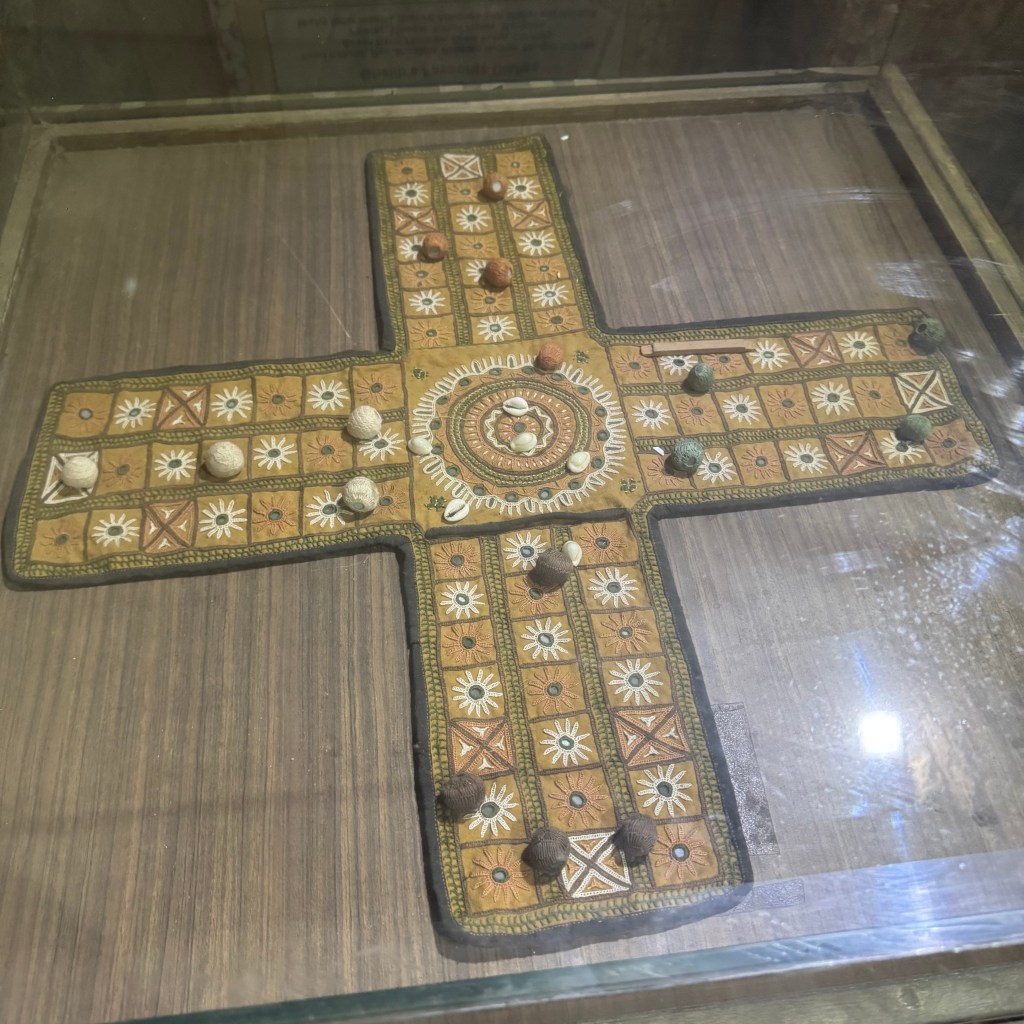
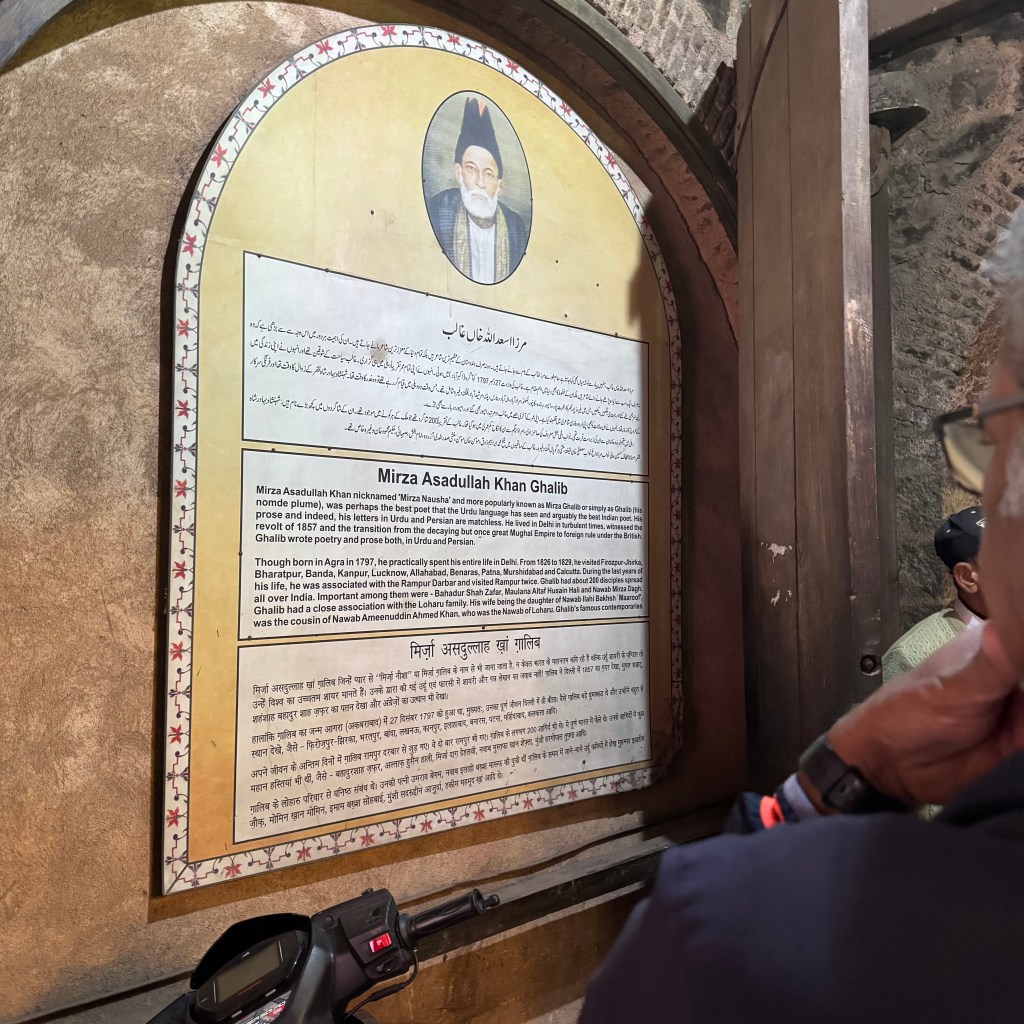
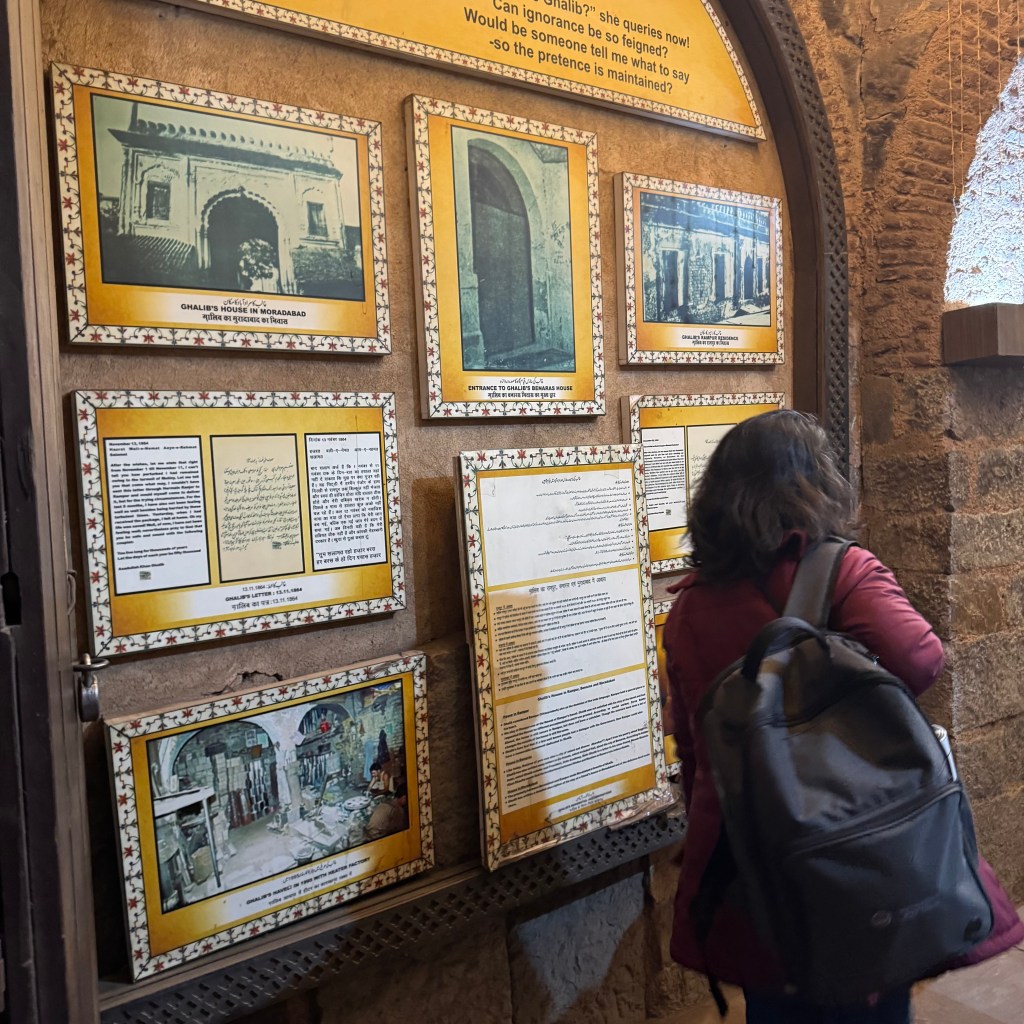
Standing in the place where Ghalib once lived and worked, it wasn’t the weight of history that moved me but the small, unexpected details that made his presence feel tangible. The tour framed him in plaques and dry explanations, but tucked among the displays were signs of life: a well-worn ludo board, resting as if he might return to resume his game. It was in those less curated more intimate moments that I could imagine him not as a long dead poet, but as someone whose voice still resounded emotionally from that distant past to still reverberate with our modern version of humanity.

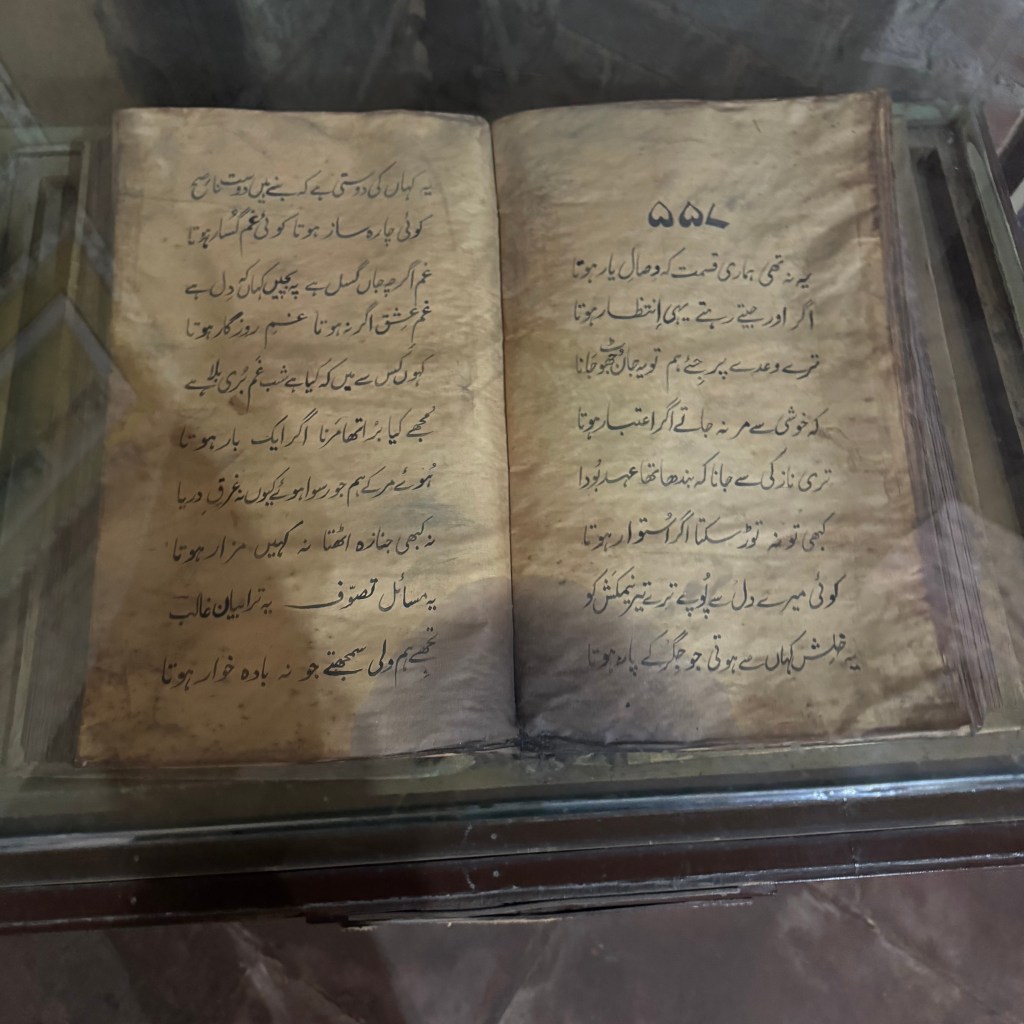
Yet immersion was elusive. The noise of the tour group, the fractured and poor translations with such formal English text that flattened the majestic rhythm of his poetry all of it kept Ghalib at arm’s length. Until, unexpectedly, the words bridged the gap. As I was reading the urdu aloud to myself quietly,

न था कुछ तो ख़ुदा था, कुछ न होता तो ख़ुदा होता
डुबोया मुझ को होने ने, न होता मैं तो क्या होता
roughly:
“When there was nothing, there was God; if nothing had existed, there God still would be.
I have drowned in my own existence, if I did not exist, what then would I be!”
a young scholar beside me recited the same passage with the proper cadence and pronunciation, and asked for my thoughts. For once, my translation was decent, my interpretation seemed to resonate.
I replied that Ghalib’s ghazal is a meditation on humility, weaving the vastness of nothingness and infinity into his concept of God. In his verses, neither existence nor absence holds absolute meaning and our place in the universe is neither everything nor nothing, but something that draws significance only through the divine. Even the smallest dust within creation is imbued with meaning through God’s presence, a reminder of both human insignificance and the profound gift of being seen, acknowledged, and granted purpose.
More than this, the stilted colonialized british-influenced overly holy translation, I said, was bakwas! Absolute nonsense with the thees and thous! Their pleased expression first at hearing my recitation in urdu and then their quiet nod was more meaningful than the tour itself.
In that instant, I was transformed from a tourist visiting Ghalib’s past and stepped into the ongoing conversation, where his words still moved those who took the time to read, to question, to listen. His presence wasn’t confined to bricks and ink, but lived in the moment of shared discovery between two lovers of words intertwined into core human emotion.


 Awaara
Leave a comment