Tera Darshan, Phir Se (Once again to Behold You)
The journey began long before boarding the plane. It began in the subreddits of Hinduism, where culture and ritual in modern day message threads, in notes traded across time zones, in questions flung with hope for answers into the digital void.
Years ago, someone had asked how to “be a better Hindu.” The mechanics of mantra, the rules of ritual, what quantity of mantras repeated are enough. I hazarded a simple reply that reflected my feelings about most religion: God accepts any act of devotion as a gift. The method is a means, not the meaning. Even the sadhus find their own way in all their respective akhadas. When Arjun asked Krishna which path leads to liberation—bhakti, karma, or jnana—Krishna just said: Yes.
That answer found its way to Hemant.
He reached out to me via DM like an old friend I hadn’t met yet. But in time, we named it more plainly: we were brothers—perhaps not born to the same mother, but known to each other across lifetimes. While some might raise an eyebrow at such a claim, I can only offer the truth that feels true to me: Hemant is my brother, here to help reintroduce my wandering spirit to its roots.
When Mahashivratri approached, Hemant gently helped me shape a small ritual. At 5:00 a.m., in the still dark of Michigan winter, I rose to prepare a mixture of honey, milk, and spice, and slowly poured it over a handmade Barf ka Shivling. I chanted Shiva’s name, again and again, my hands steady, my heart warm. Though I stood barefoot in the snow, the cold never touched me. I only felt Bharat se mera bhai mere paas aaya.
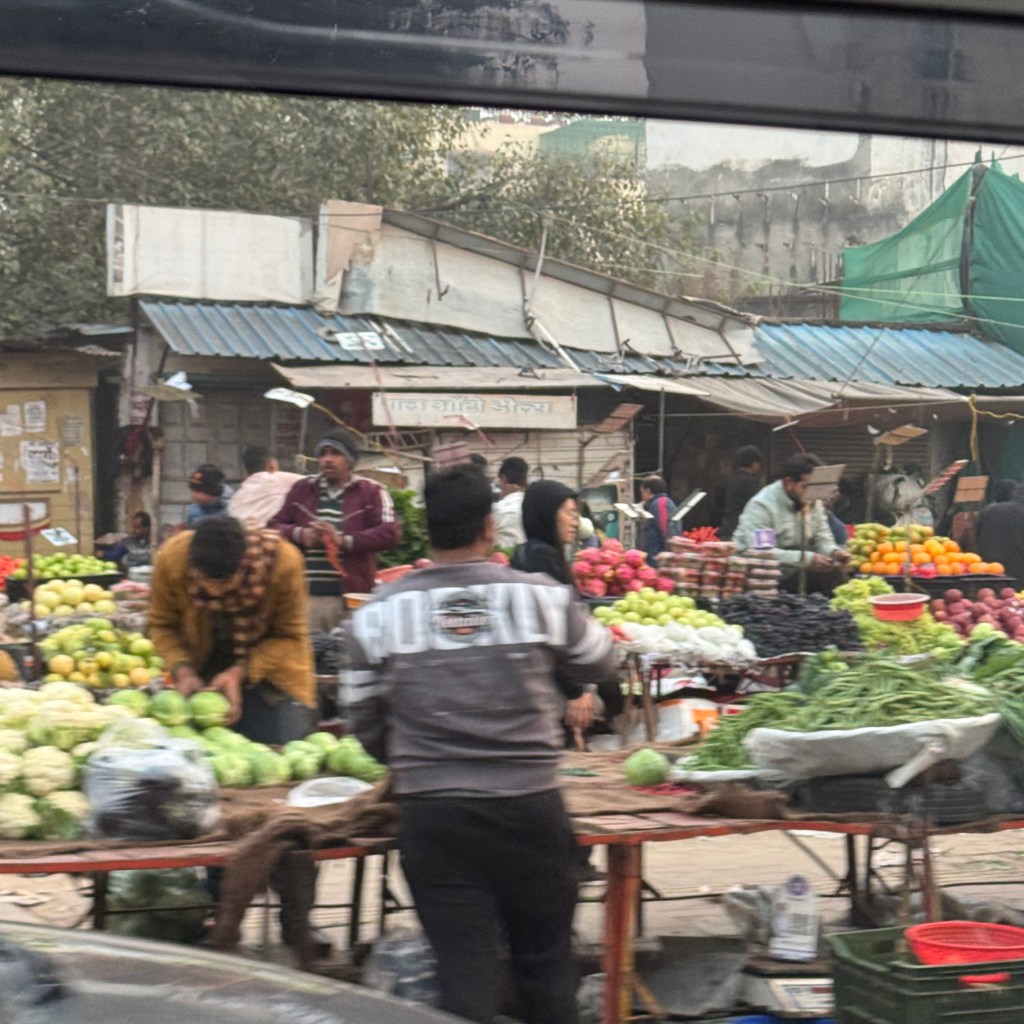
My first drive across Delhi was anything but quiet. The streets roared and surged—ubiquitous autos weaving like dragonflies, foot traffic, horse carts, chai wale and every other thing for sale. We passed an outside market that stretched into infinity. Everything was there. My driver, a calm soul from Sikkim, who reminded me so much of dharmendra in chupke chupke, maneuvered through it all with practiced stillness; the choreography of chaos to him.
And then, just past Jheel Park on the Ring Road, a Kinnar approached the car. She was radiant and beautiful—her crimson sari blazing, bangles stacked and singing with every step.
Tap tap tap… “Hooooo Bhaiya!” Khidhaki kholooooo!
I paused, not knowing if I should open the window or not! “Hum dua bhi dete hain, baddua bhi.” She said lightheartedly.
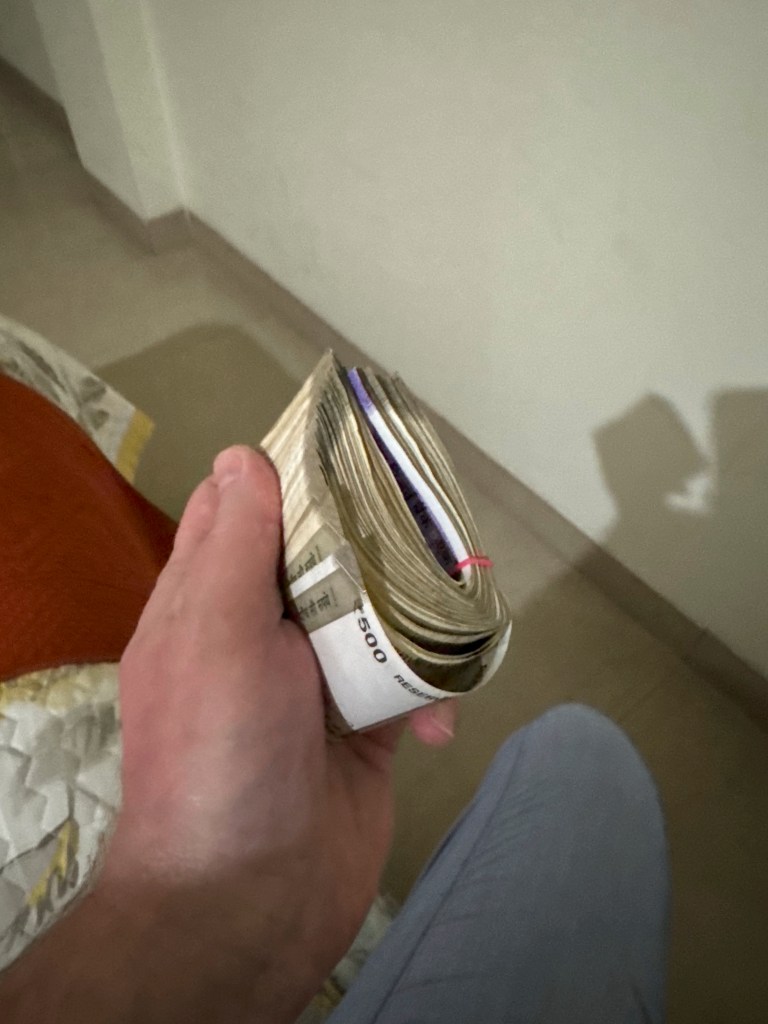
She clapped her palms and looked directly into my eyes—not asking, definitely not begging. Proclaiming. The driver, superstitious about these things rolled down my window. I fumbled for words. No rupees in hand, just crumpled American bills. I showed her, sirf USA ke paise! Maf karo!!
“Paise hai, paise,” she laughed reaching out her hand. “Le lo!” Hoping intent would carry what currency could not I passed her a bill.She grinned and took it with effortless grace, tucked it into her blouse and gave me her blessing.
“Sada suhagan raho,” she said—may your union endure.
Her blessing felt perfectly placed; I was in this journey through India alone after all, though long married. Kinnars don’t just offer goodwill—they wield power. To bless. To curse. To see. Her words landed like an anointing, not of marital status, but of spiritual readiness. A signal: you may proceed safely on your journey.
As she walked away, hips swaying like punctuation, I smiled. I’d been recognized. Not as a foreigner. Not as a man on pilgrimage. Just… part of the whole scene.
When we reached the apartment, at first sight of my bhai, I rushed to him—no hesitation, no modesty. I embraced him tightly like someone I’d been missing across lifetimes. I smiled and bit my lip so I wouldn’t cry.
We walked up together to his flat—a tasteful, lived-in flat in a quiet middle-class block of Goo-roo-gowaan. (Never Gurugram—that name is only for maps—it doesn’t live here!) At the threshold, I slipped off the shoes that had carried me from Detroit to Delhi and stepped into house slippers. It felt like a ceremony: letting go of one soil and slipping into another.
To be welcomed into that circle, not as visitor, but as a guest overwhelmed me. I whispered the phrase I’d practiced in the car, again and again:
यहीं अभी इतना खुशी मिलने लगता है
Yahin, abhi, itna khushi milne lagta hai.
Right here. Right now. I’m feeling so much joy.
But in the moment, of course, I forgot everything. “Namaste, Bhabhi! Aapse milkar Kisha hui!” I beamed, mangling khushi into Kisha. It didn’t matter. They understood me better than my grammar ever could.
With Mummyji, all I could offer was Pranam, Mummyji. I wanted to say thank you for Hemant. For this life. For this feeling. I wanted to touch her feet but stumbled instead into reverence. How could I say enough?
The women greeted me nicely, gently ushered us into the sitting room, then disappeared into the kitchen like they’d rehearsed this day.
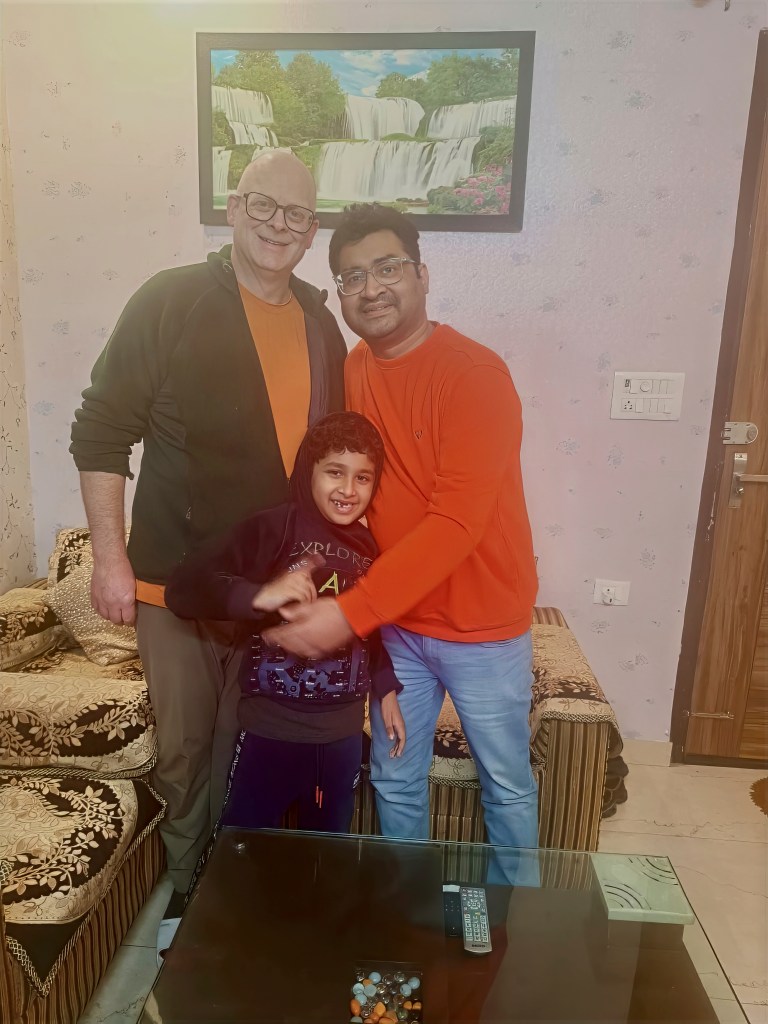
Hemant and I sat like old uncles catching up across nations—we spoke of Modiji and Trump (who had only recently entered the American stage), of our families, of sorrow and grace. As if we didn’t meet but resumed where we had left off last week.
I sat beside Bhuvi for a bit on the sofa—their son, eager to share his home with me, eyes sparkling with that confident mix of logic and mystery, just like his father’s. Listening to him, I realized this wasn’t just family in name but clearly lineage. The way stories are inherited not just through words, but through tone, gesture, curiosity. I gifted him the laptop I had brought (a toy, really—a Chromebook to help with his studies and for him to mess around with), and then he was off to play, and also to get underfoot in the kitchen. He was such a boy! Causing his parents to worry when he wasn’t around… and also when he was.
Dinner came unannounced and unrelenting: suddenly the table is full of phulka rotis, sabji, dal tadka, each bite familiar yet new. Lavish would be the wrong word. This was nourishment in its purest form for all of mind body and soul. Beautiful home cooked food with memory still simmering inside it. I hadn’t eaten since my U.S. breakfast and I was so happy for that. I truly savored that meal.
When dessert came, it wasn’t an offer. It was a declaration. Everyone watched me take my first bite of their Alwar ka mawa. The flavor settled into me like a bhajan finds its note, there is a word: ehsas realization. They watched the fact of that delicious desert exhibit itself in my expression. I can say now
Koi doosra mawa toh feeka feeka!
Aur main yeh khaunga nahi hai.
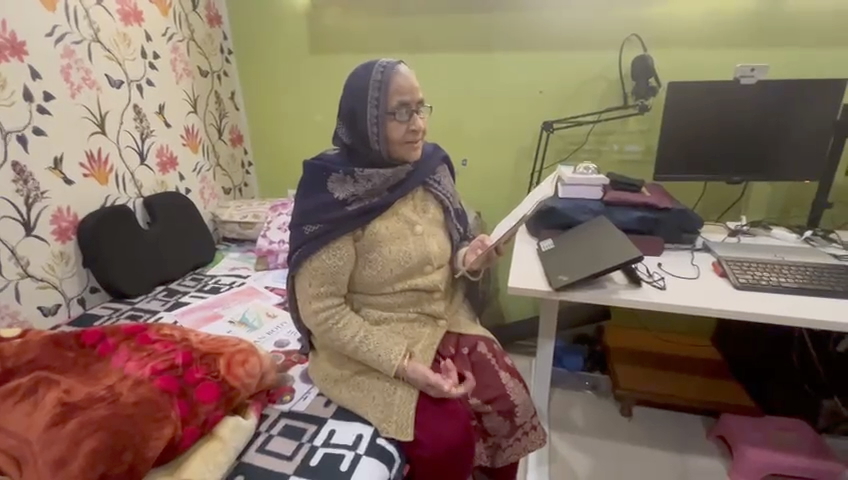
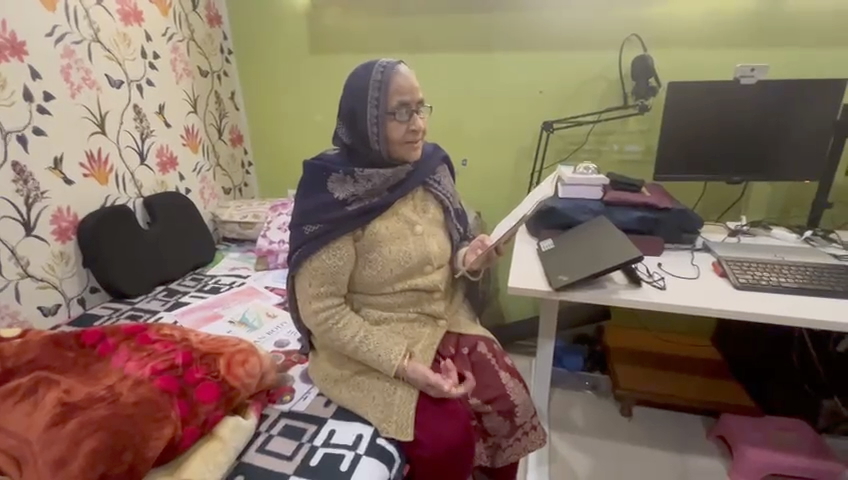
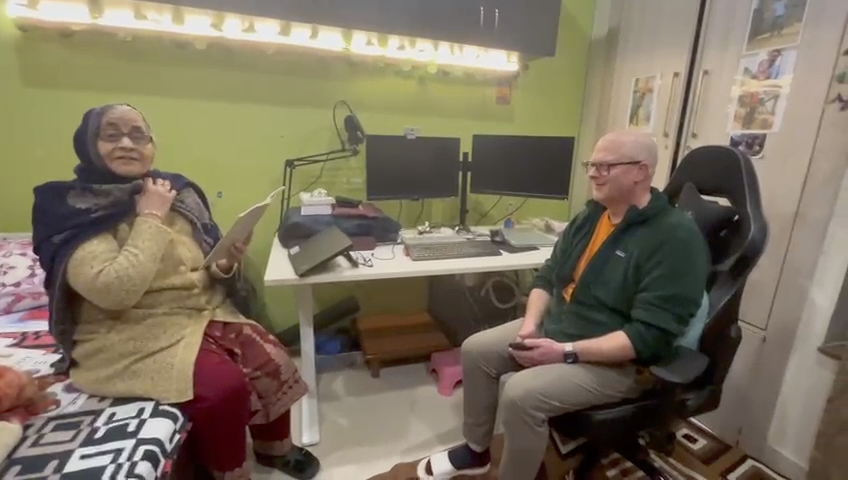
Then, without prelude, something shifted. A silence fell. Hemant led me into the small office, lined with his spiritual books. Mummyji sat cross-legged on the bed—not rehearsing, not preparing. Just settled, as if the song had been waiting in her throat for this very moment.
“I heard you like bhajans,” she said, and smiled.
Then she began.
Her voice was solid and grounded, not the wavering tone of someone reaching, but the rooted timbre of someone offering. Each note rose like it had always lived here. Maybe in temples. Maybe in kitchens. Maybe in mahila mandal on one of her pilgrimages. So here she was blessing me with this bhajan:
“Jagat ke rang kya dekhu
Tera deedar kaafi hai…”
Why seek the colors of the world, when beholding your face is enough?
I recognized the bhajan! I had heard it many times. But here, now, it became something else. Not a performance but more like an arrival. Of her voice. Of me really in India.
When her final verse drifted into the folds of the room, I recited what I could: the Nirvana Shatkam. Ancient verses by Adi Shankaracharya, offered by a pilgrim with broken Sanskrit and bare sincerity.
Centuries ago, a boy on the Narmada was asked, “Who are you?”
He replied with this hymn.
Now I offered it, quietly, to a mother whose eyes held stories older than speech.
She smiled—not for the precision, but the offering.
We were no longer across oceans. No longer in separate spheres of seeking. That night, in that small room, devotion passed from one voice to another like the light of the diya; wick to wick to illuminate the way as on Diwali.
“एक एक से दूजा रोशन हो, दीया से दीया जले,
प्रेम भक्ति की गहराइयों से, अंधकार सब चले चले।”
From one to another, we can spread the light of the diya.
From the deepest love and devotion, all darkness will flee.
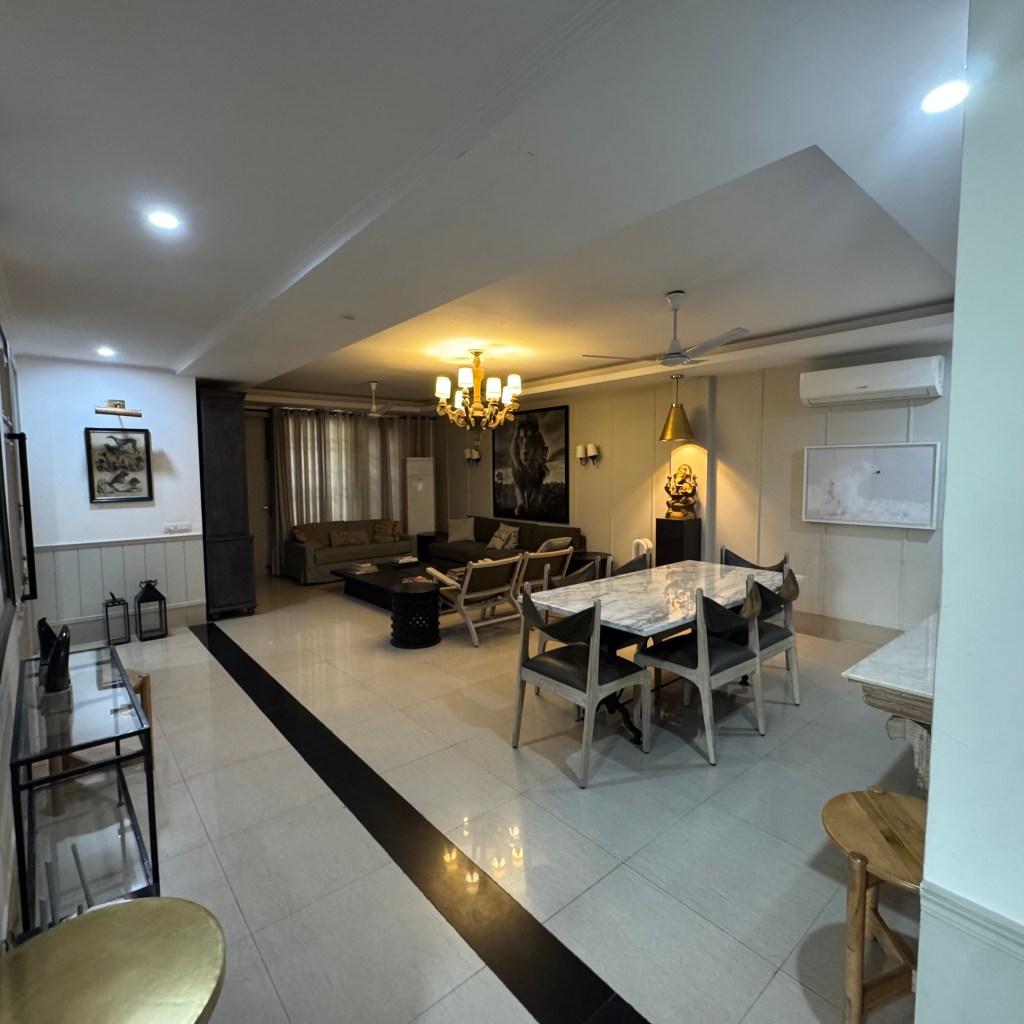
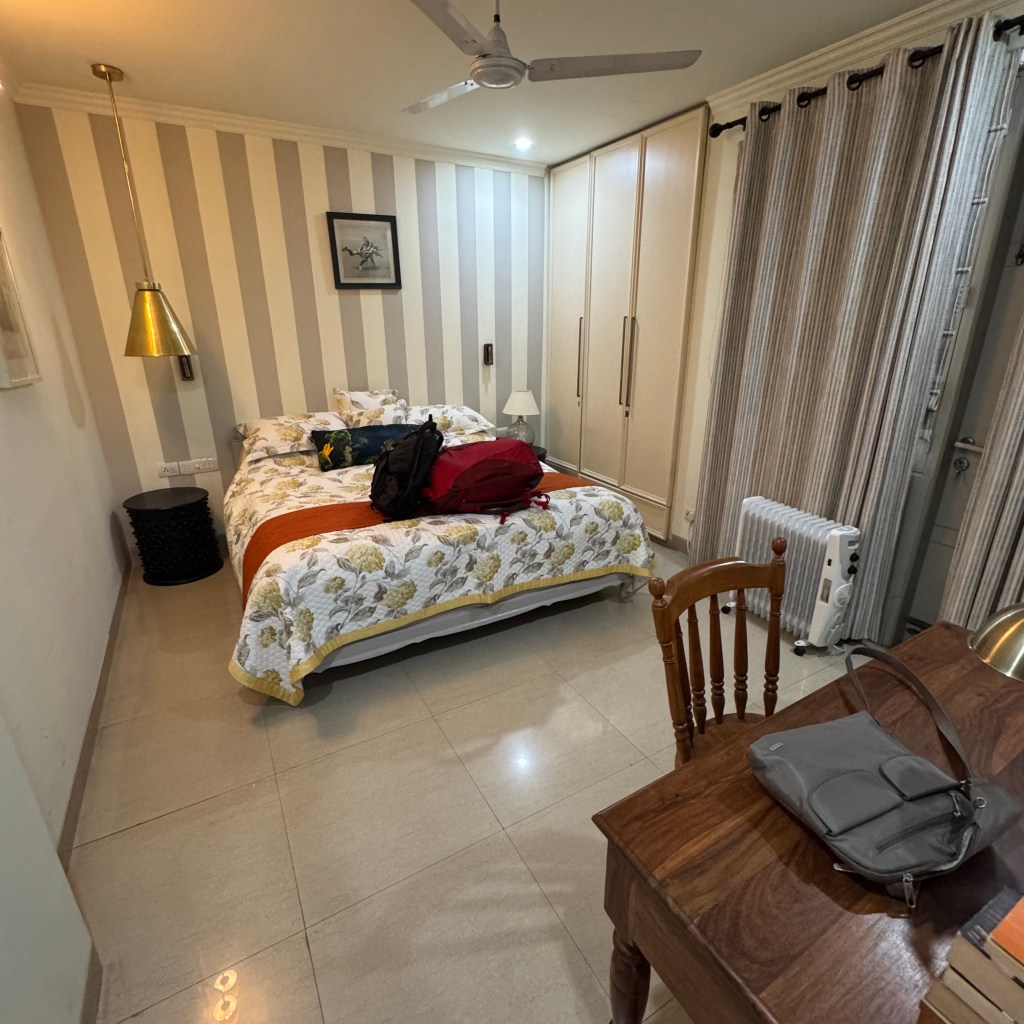
Too soon, it was time to return to the Airbnb.
Night had folded itself over Gurgaon, quiet and fragrant. As I bent to put my shoes back on, Bhuvi hovered near the door—half curious, half already distracted by something upstairs. I smiled. Maybe he wouldn’t remember this night years from now. Or maybe he would. Maybe one day he’d tell someone:
“My papa’s friend from America—he came to our home once, and we made him feel like he was part of something huge.”
Shoes were slipped back on. Slippers left behind. We bid our farewells—Pranam, Namaste, Phir Milenge. Promises passed like prasad: quietly sacred. Not grand declarations. Just a certainty that we will meet again.
Later that night, as I returned to the quiet of the Airbnb, the warmth of Mummyji’s bhajan still echoed in my chest. I was full—not just with food and affection, but with a kind of stillness that arrives only after something sacred has been shared.
What I didn’t know then was that the next morning, another guardian for my visit to Delhi and Prayagraj was waiting. A new bond was about to be made—not from ritual, but of, chai stalls, one or two pegs and unspoken trust.
Mohan Bhaiya.


 Awaara
Leave a comment