
भक्त जनों के संकट, दास जनों के संकट, क्षण में दूर करे
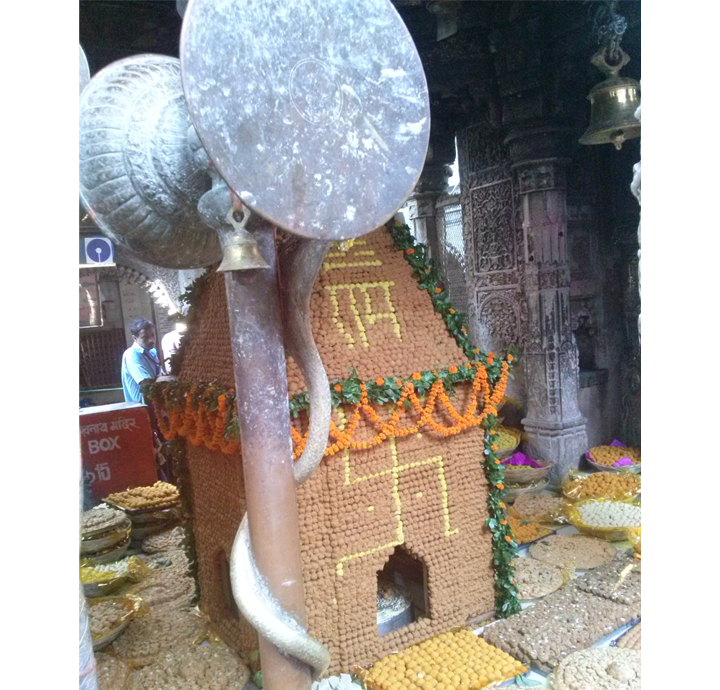
Our journey led us to the heart of Banaras, where the sacred pulse of devotion beats strongest—to Shri Kashi Vishwanath Mandir. The air was thick with incense and anticipation as we moved through the throng of devotees, all eager for a fleeting glimpse of one of the holiest Jyotirlingas of Lord Shiva. The temple, ancient and immense, stood not merely as a structure but as a testament to centuries of unshaken reverence.
The path to darshan was not just a walk; it was a passage through layers of faith. Chanting rose like waves, most especially from Hari, one of our group members, who seemed to have a natural ability to engage the thousands present. His energy was infectious, and soon even I joined in. He would call out, “Om Namah Parvati Pataye—Har Har Mahadev!”—each syllable vibrating through the crowd, binding strangers into a single, reverent force. All the crowd shouted with pleasure “Har Har MAHDEV!” It felt good to join in.
The queue was serpentine, as many are in India—stretching endlessly, yet carried by an unspoken patience, as if standing in line was itself an act of devotion. Along the way, I greeted the occasional devotee, many curious about where I was from. Their surprise doubled when they realized I could engage with them in Hindi. Each exchange was a quiet joy—an opportunity to shape sentences, to immerse myself in the cadence of their language, and to see the delight in their eyes as they recognized the effort to honor their culture.
The darshan itself was fleeting, lasting only an instant, yet within that moment, the presence of the divine felt boundless. It was never about seeing—it was about feeling. Devotion doesn’t end when the darshan does. It begins there, unfolding in ways unseen, shaping the way one walks through the world afterward.
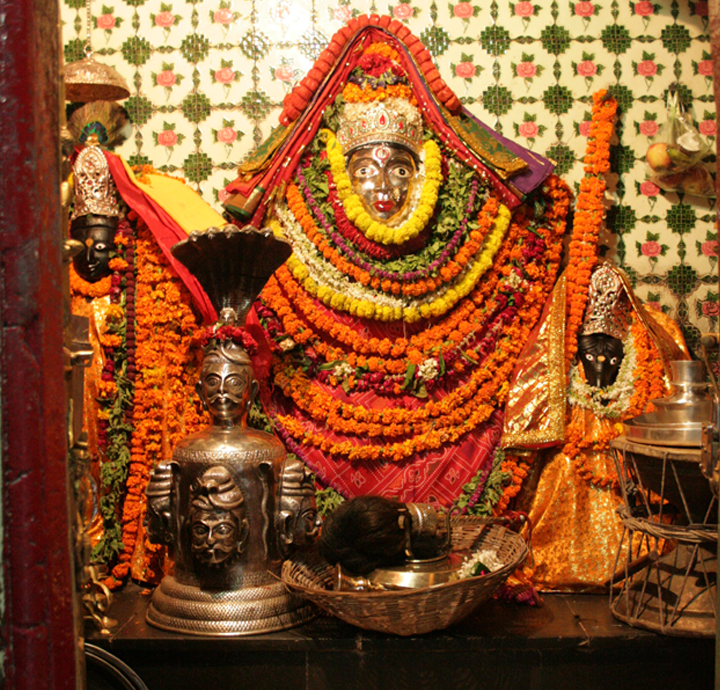
The following morning, our path led us to the temple of Varahi Devi, a quieter yet equally profound sacred space. There, a pandit sat upon a ledge along the outer wall of the inner temple, his presence as much a part of the space as the stone beneath him. He blessed us—not merely as ritual, but as recognition. Perhaps it was a confirmation of belonging, a silent assurance that faith was not bound by birthplace or familiarity. We made our offering and departed, carrying with us the echoes of prayer woven into the temple walls.
Beyond the sacred spaces, in the labyrinthine alleyways of Banaras, we stumbled upon a chaiwalla—an unassuming guardian of a tradition stretching back longer than memory itself. His stall had stood there for 65 years, yet as I sipped the spiced warmth of his chai, I felt I was drinking from a lineage far older. I imagined the ancient ones, gathered just as we were, murmuring conversations, exchanging thoughts, laughing loudly and sipping the hot chai to fight off the cold winter morning chill. Had they wondered, as I did, about the future? Had they stood at the same crossroads of time, feeling the weight of what endures?
In the end, this was never just a journey to learn Hindi. It was a pilgrimage through culture, faith, and the timeless hum of human devotion. Banaras left its mark upon me not just in its designated temples, nor solely in the rituals I had learned over time, but in the faces of those who carry the essence of these traditions forward—without formality, without pretense. Faith in Banaras does not exist solely in its structures or ceremonies—it breathes in the people themselves, rituals or none, temples or none.
The Maha Kumbh Mela, the sacred chants, the whispered blessings, the quiet moments over chai—all of it deepened my understanding of India, not as something to study, but as something to feel, to absorb, to belong to.
I carry this journey with me, written not in words but in experience. And in that, Banaras does not fade. It remains.
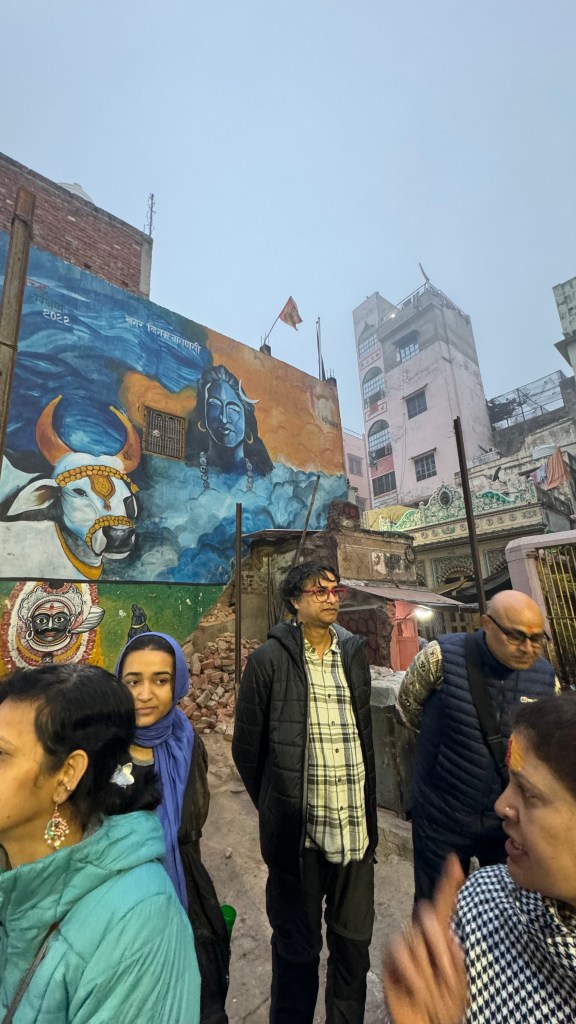
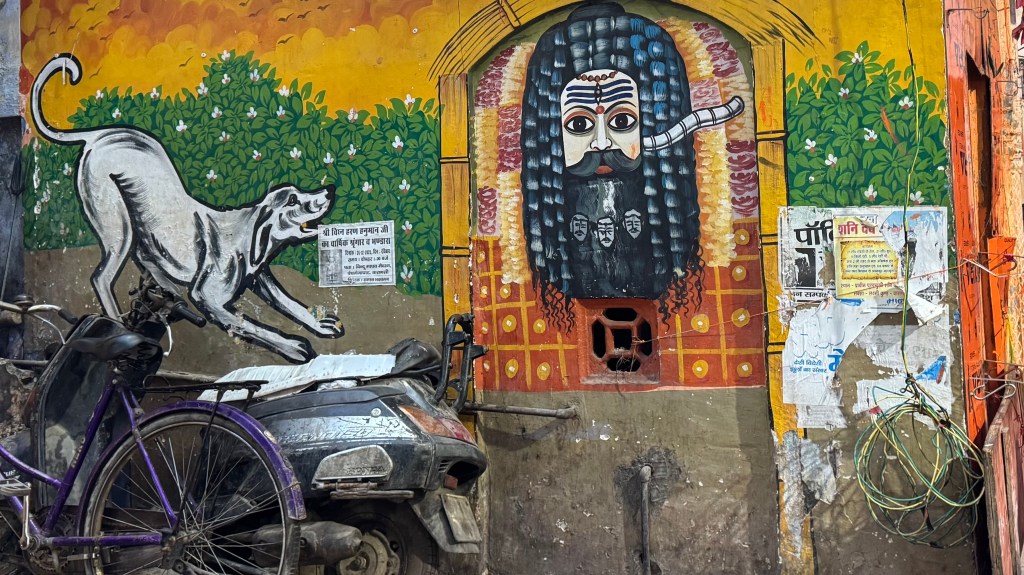
Phtography was forbidden at the darshan and within the temple compund, so I found some images online that reflect my experience well. Photo of Hari and other group members are mine.



 Awaara
Leave a comment