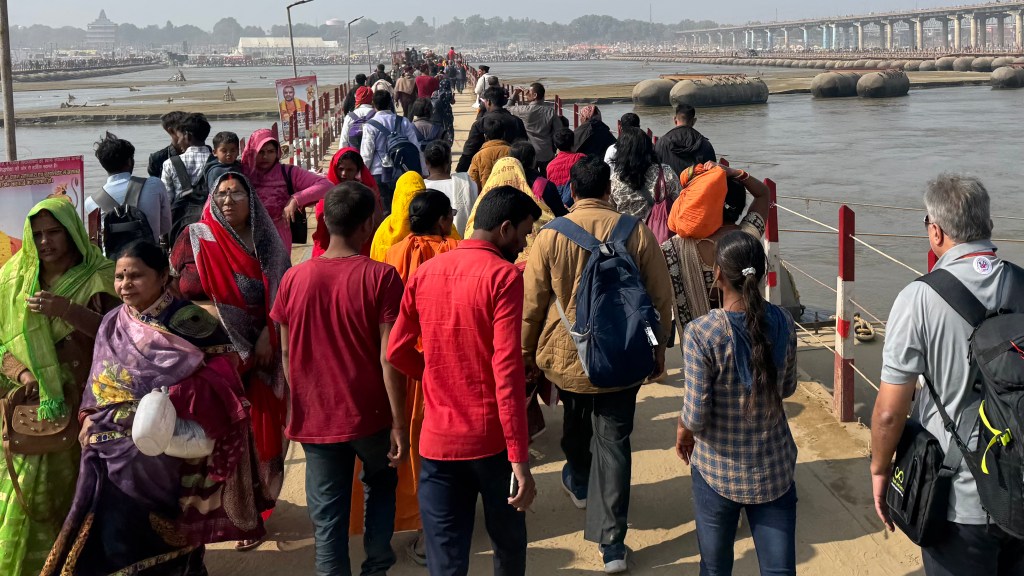
In 2025, the Maha Kumbh Mela returned. A festival so rare that it only occurs once every 144 years, drawing millions to Prayagraj’s sacred waters. While the Kumbh Mela rotates every three years among four holy sites, it is in Prayagraj, at the Sangam (the confluence of the Yamuna, Saraswati, and Ganga rivers) where pilgrims seek a purification. Hindu pandits say that immersion in these waters cleanses lifetimes of sin, breaking the cycle of rebirth, offering moksha, or spiritual liberation.
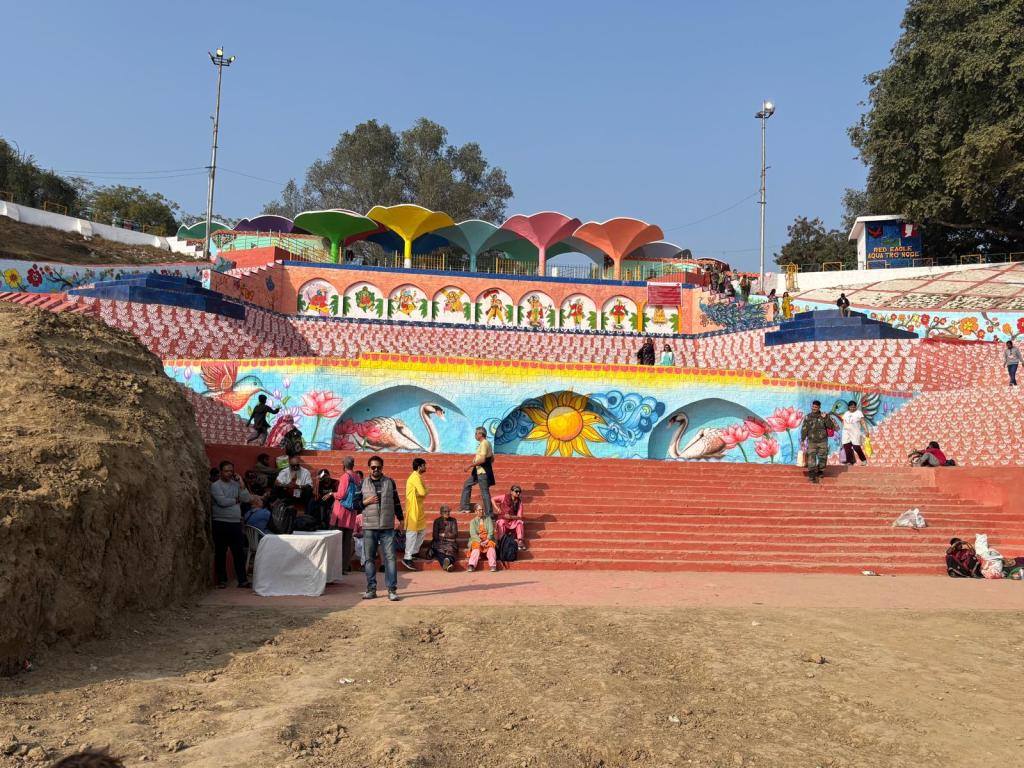
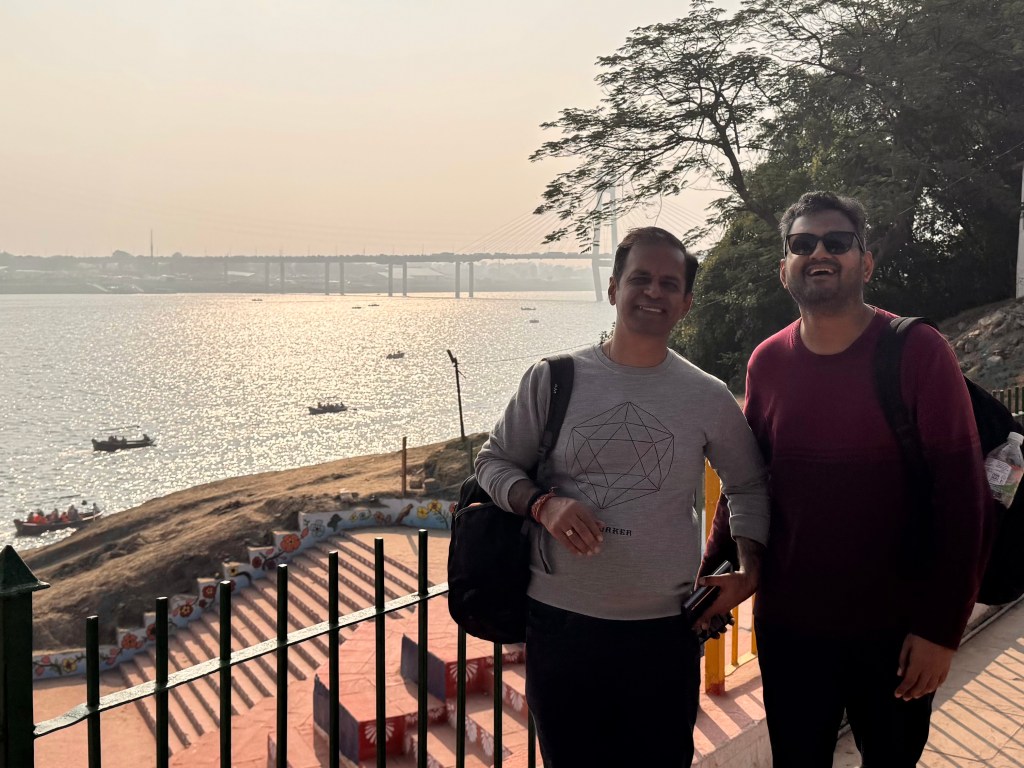
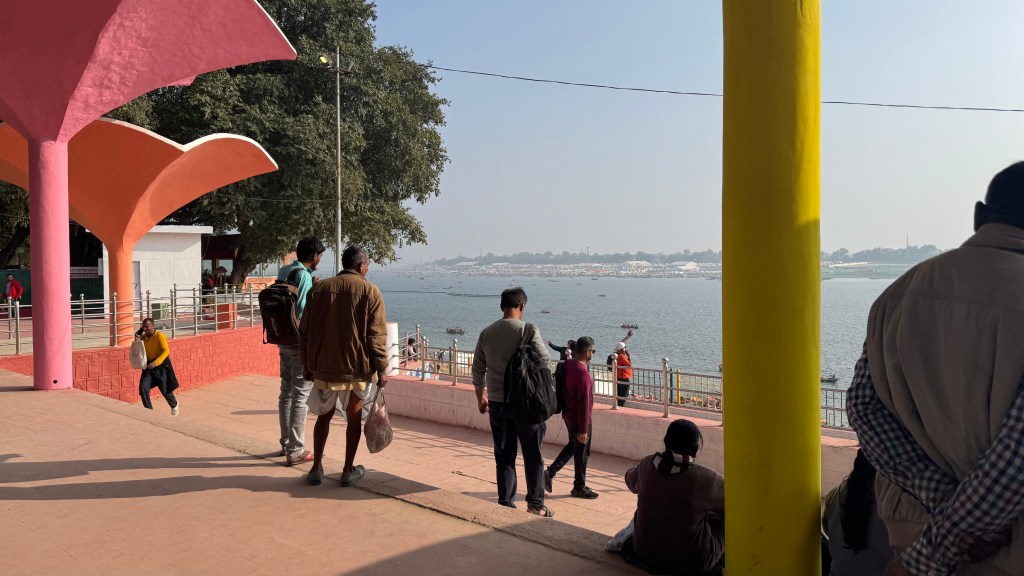
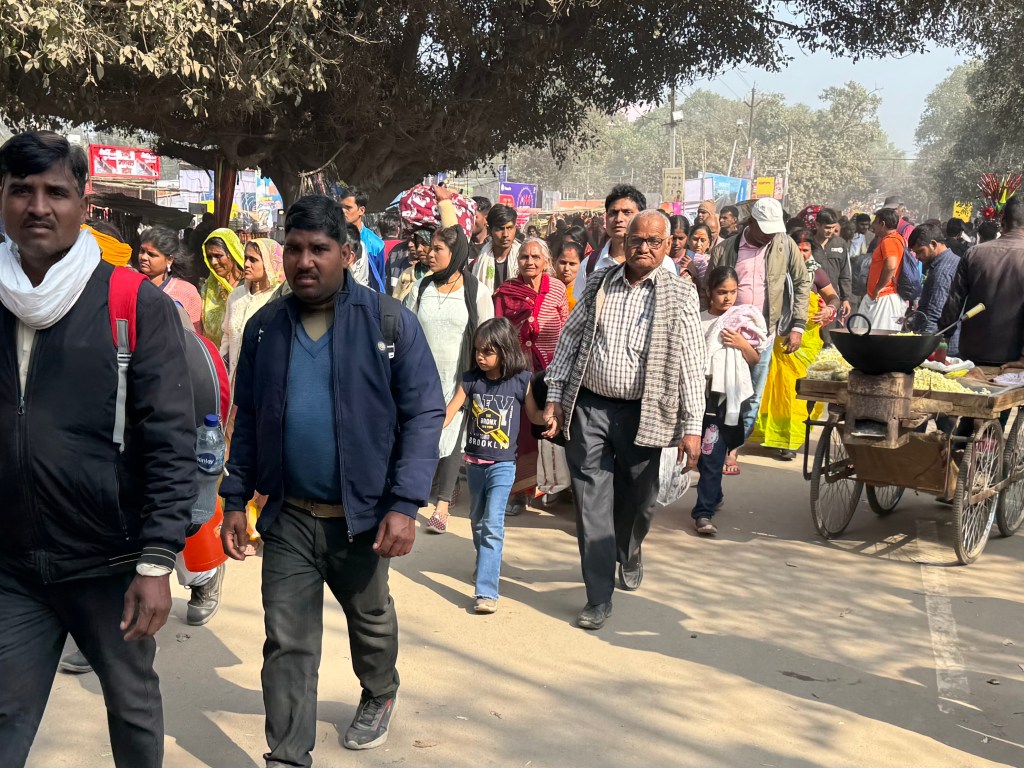
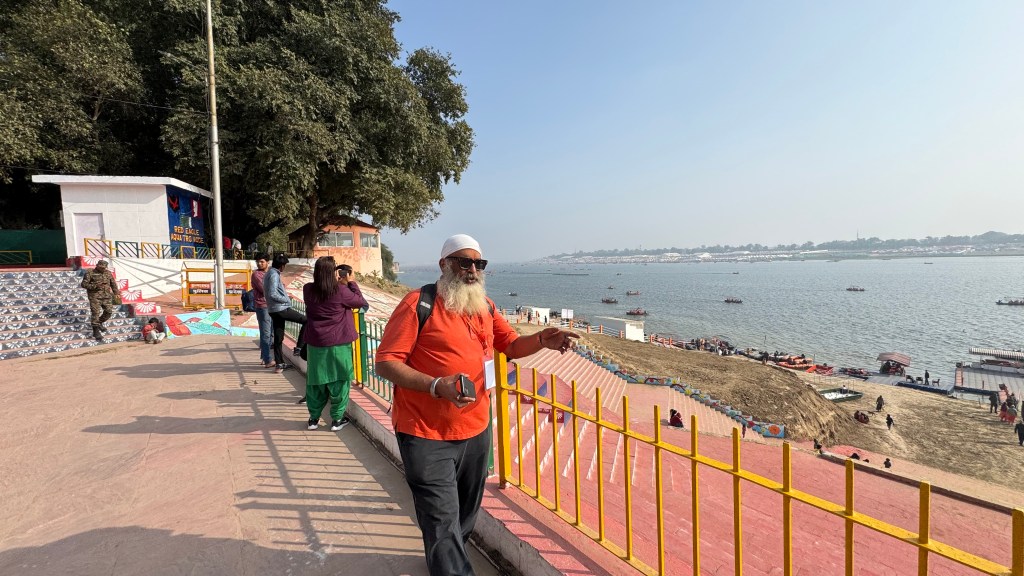
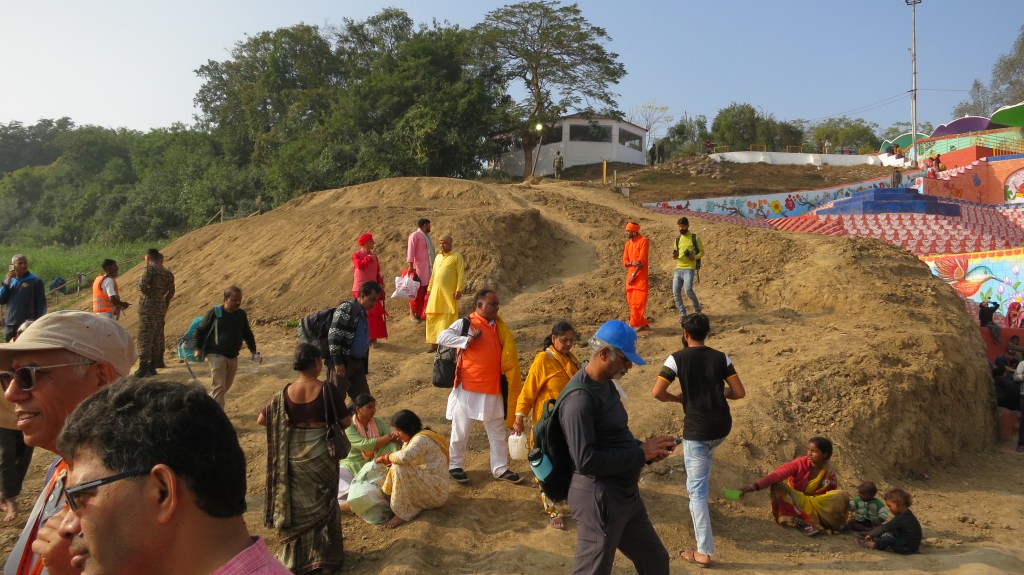
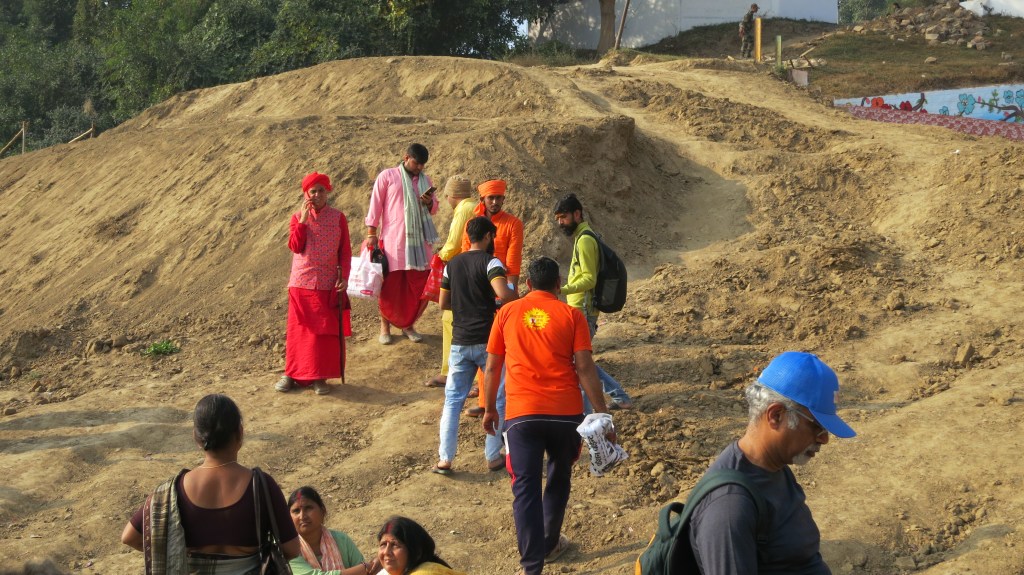
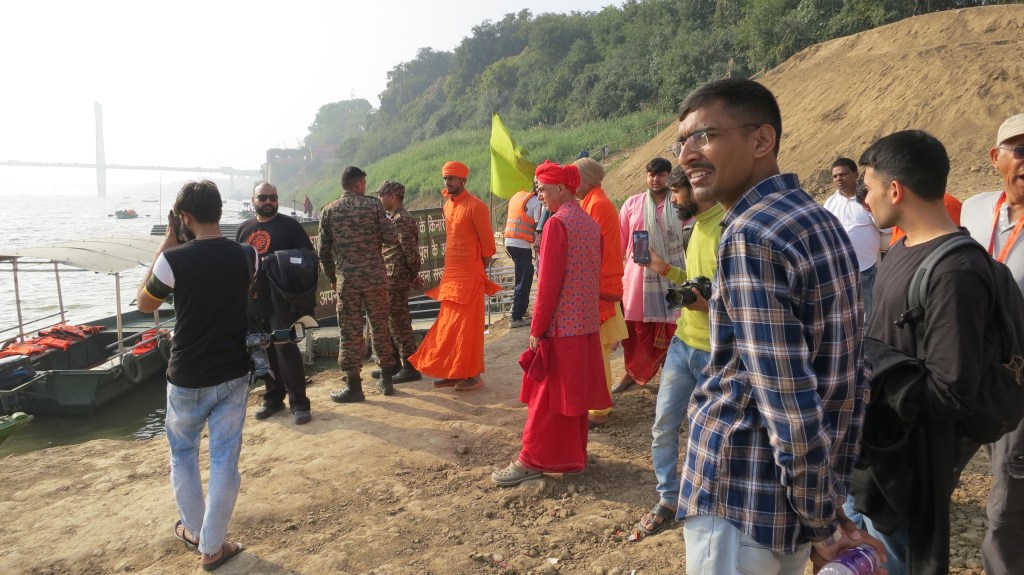
This journey did not begin with the boatmen’s oars, but with a choice that moved us deeper into the shifting currents of the Mela’s chaos. At Sangam Ghat, long lines stretched, promising hours of waiting with no reassurance that a boat to the sangam would be available. So Instead we walked to the Saraswati Ghat, where boats were usually secured with ease. We finally arrived on the banks of the Yamuna centuries of devotion meeting a seething present. The air was alive with the heady blend of marigold, incense and perspiration and the rhythmic sound of hundreds of boats rowing. Our guide had assured us that our boat would be waiting. We had trusted in that promise. But when we arrived, it was gone. There was No explanation or alternative given, just murmured apologies, their eyes darting this way and that revealing that there was probably more to the story. The sun was just past its peak, bathing the scene in stark shadowless light and still we waited. Suddenly, a handful of figures—police, photographers, men wrapped in crisp kurtas and saffron shawls arrived upon the ghat, their presence shifting the energy of the space without a word. Shortly after their presence was explained when the VIP himself stepped forward from a route unseen, his posture effortless, his presence commanding and unquestioned. His confident movements along the ghat showing that as he expected every detail of his arrival had been planned before his feet touched the steps. His entourage scurried around him, ensuring that no obstacles interrupted him. Our own guides at the ghat remained apologetic— what could they do? This mela, open to the millions, still bent to power.
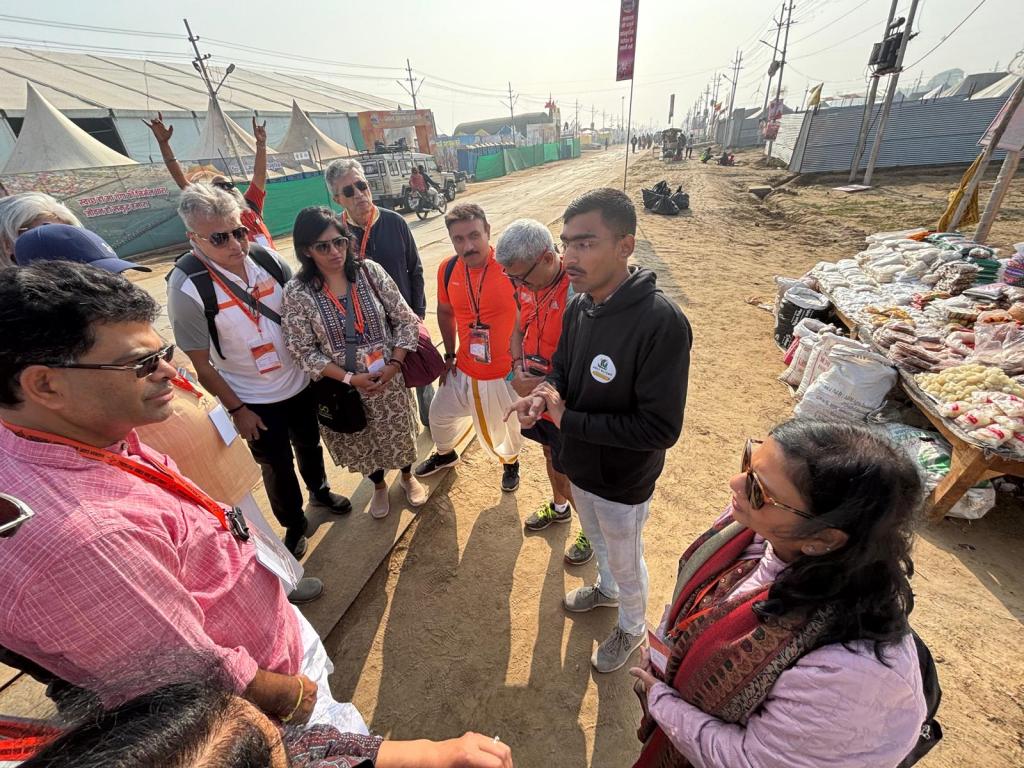
Gopi and Bheem had orchestrated everything, yet never imposed their vision on anyone else’s desires. They moved between logistics and quiet presence, ensuring that everything functioned while giving each of us the freedom to absorb, question, and engage as we wished. At any moment, I knew I could have said, “I don’t want to,” and they would have adjusted without hesitation, without judgment. Yet, here at Saraswati Ghat, as barriers formed and resistance surfaced, I saw their power in a new way: as advocates for the whole group. Gopi and Bheem became undeniable forces. They did not hesitate, did not pause. They jumped into the fray, pressuring our guide, weaving through the invisible threads of hierarchy with fierce determination. When the situation at hand threatened to turn us away and ruin the plans they had laid, they practically willed the experience to continue smoothly.
The VIP, oblivious to the turmoil unfolding around him, scanned the gathered pilgrims with practiced disinterest—until his gaze landed on me. The outsider. He greeted me with a quiet namaste, fingers pressed together in Anjali mudra, and asked where I was from, how I was enjoying India, the Maha Kumbh. A polite exchange, neither deep nor meaningful, yet it marked me as an outsider from the rest of my group. His words did not bring me closer to the experience; they set me apart from it. The communal devotion that pulsed through the crowd remained untouched by him—and by me. As he stepped forward, enveloped by his entourage, I realized that even here, even now, I remained a stranger.
Amidst this rocky prelude that had kept me feeling isolated, there was Mohan—not physically beside me, but undeniably present in my resolve. He had not urged me to take part in the snaan, yet his quiet certainty had lingered throughout the journey, making the choice feel as though it were the most natural thing in the world to do.
Over the past days, we had shared stories and reflections on where we had come from, but something deeper as well— unspoken, stretching beyond a single lifetime. I feel with certainty that Mohan is my elder brother—my bhaiya from another time and place, watching over me without command, guiding without force. Though separated by distance at the Sangam, his presence was felt in the space between hesitation and action. And so, when the time came, I stepped forward—not because I had to or because it was expected, but because somewhere within me, the quiet certainty of this bond remained.
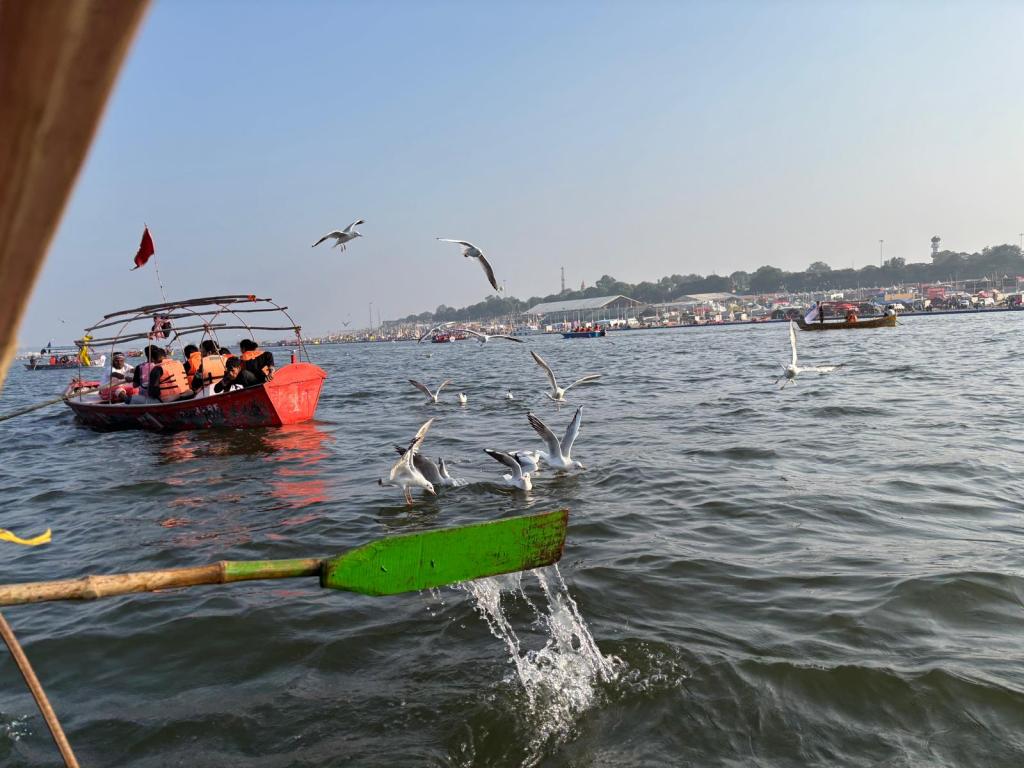
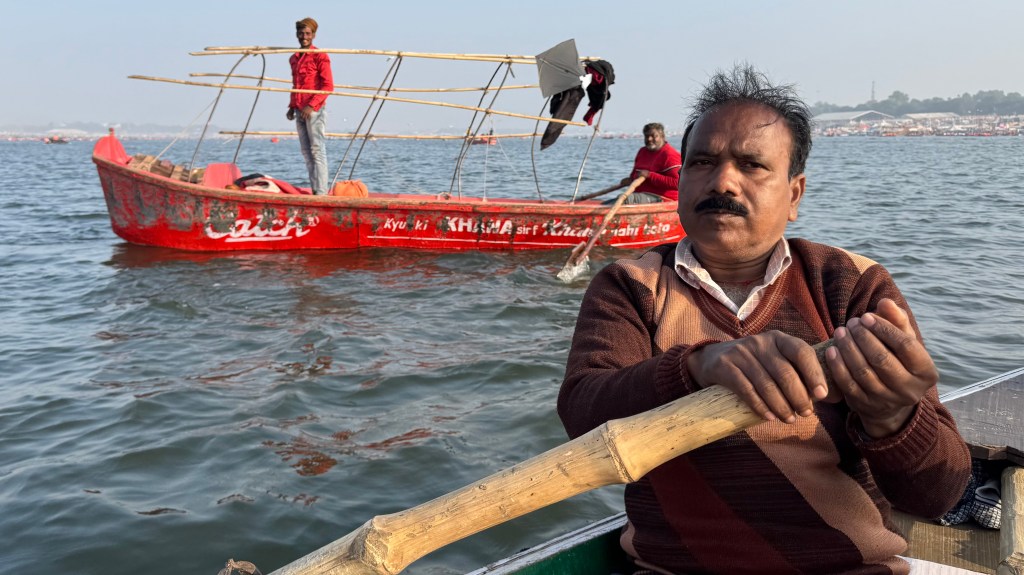
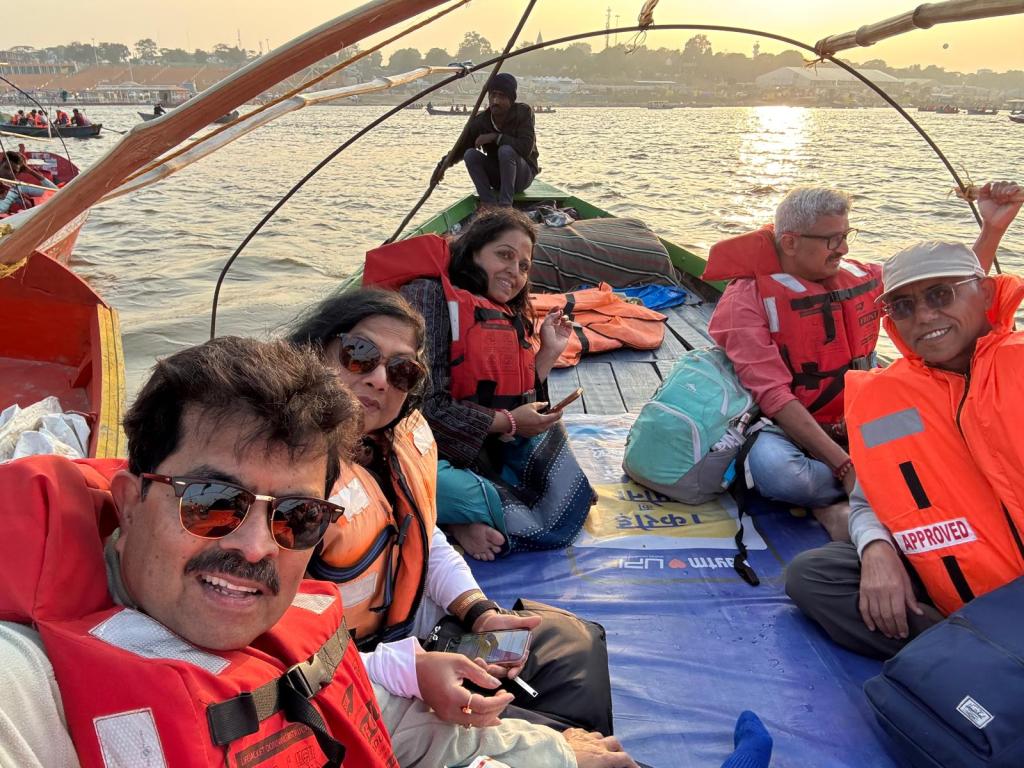
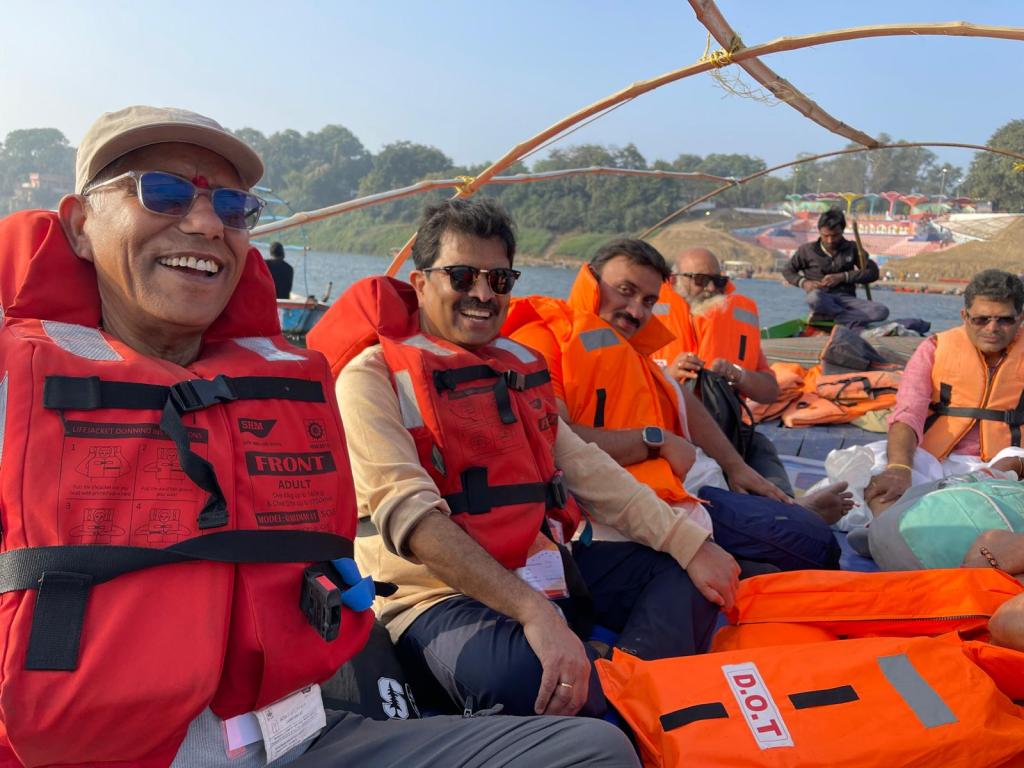
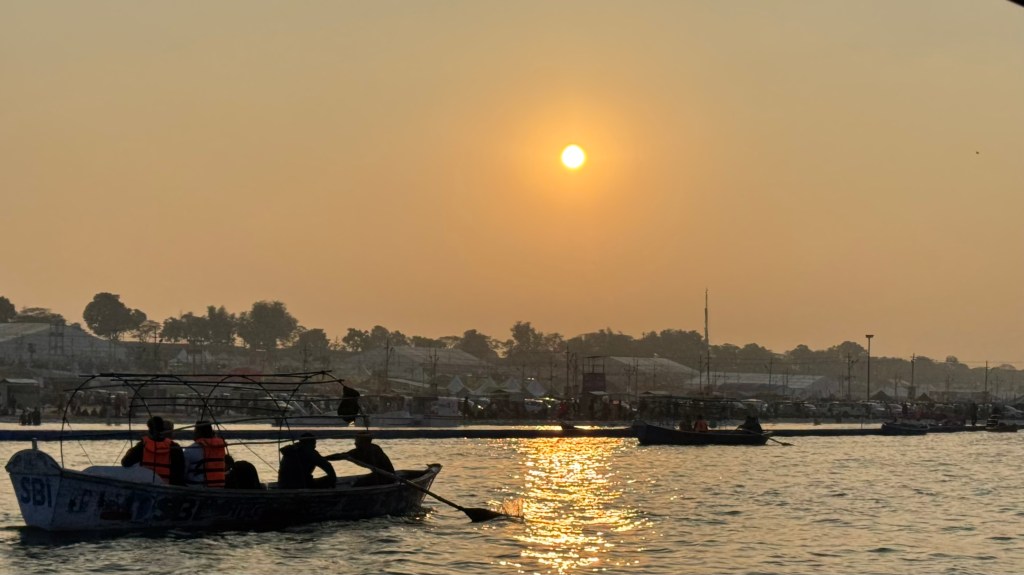
The boatmen had rowed from the ghat for over an hour, their bodies moving in effortless harmony with the river. Their earlier arrival at the ghat was meant to be the end of their day—a final return to shore before rest. But the unexpected arrival of the VIP had altered that course, his entourage snatching away the boat we had reserved, leaving us stranded until, at Bheem and Gopi’s relentless insistence they agreed to take us all out. So here they were, rowing for the third time, exhaustion settled deep in their limbs, yet laughter still colored their conversation on the long trip out to the sangam.
Men of the river, their lives shaped by its tides and vast differences between monsoon and winter seasons; saavan ka mausam and sardi ka mausam, their livelihood bound to its waters. They knew every twist, every restless current, every shifting sandbar beneath its surface. And so, even after a long day’s labor, even with fatigue pressing into their muscles, their strokes remained steady. Their movements, though practiced, carried the faint hesitations of weariness. Their smiles though genuine and easy could not conceal the strain upon their bodies.
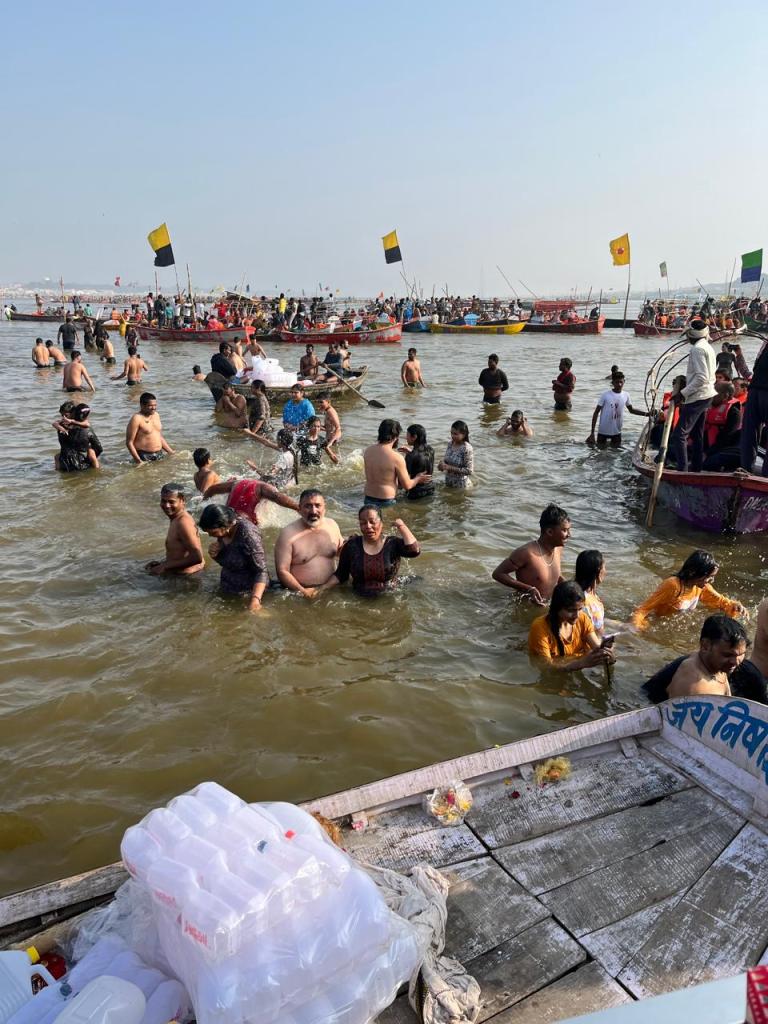
They carved their way through the water, their rhythm so seamless it seemed almost detached from the frenzy of the Kumbh. But as we neared the Sangam, the quiet dance of their oars gave way to chaos. My arrival at the bathing area is total disorder. Bodies press forward, boats jostle, the water churns.
Wandering among clusters of sadhus and pilgrims at the Mela, I felt both small and infinitely connected, a familiar sensation. But here, in the midst of chaos that quiet connection eluded me. Since each pilgrim is only given a short time to perform their rituals it must be dome quickly and efficiently with well-practiced movements and knowledge in one’s heart of what they must do. Mantras murmured in rushed whispers, their hands with the rapid certainty of a practiced devotee—no time to linger.
Some people’s eyes meet mine with quiet skepticism, saying “Why should such a stranger step in here?”. Echoes of caution from home remind me that the water is “toxic, diseased, dangerous!” Yet in that moment, hesitation has no place.
I am prompted—just take off your clothes and step in! Casual, yet deeply personal and profound considering the relative modesty I usually exercise. But, I hastily remove my clothing, feeling every eye upon me. I stand, now exposed in only my boxers, among those who, unlike me, seem entirely certain of what to do next. I try to relax, reassuring myself when I see that the looks of those in my group are filled with a quiet expectation and happiness in recognition of what I am participating in. Their eyes are filled with a sort of pride in sharing with me this deep cultural gift. Standing at the edge of the platform and gazing into the restless current, I sensed that being here at the Sangam had softened something within me. This water, far from filth, bore the legacy of history, devotion, and surrender—it pulled me in with an inevitability that defied hesitation.
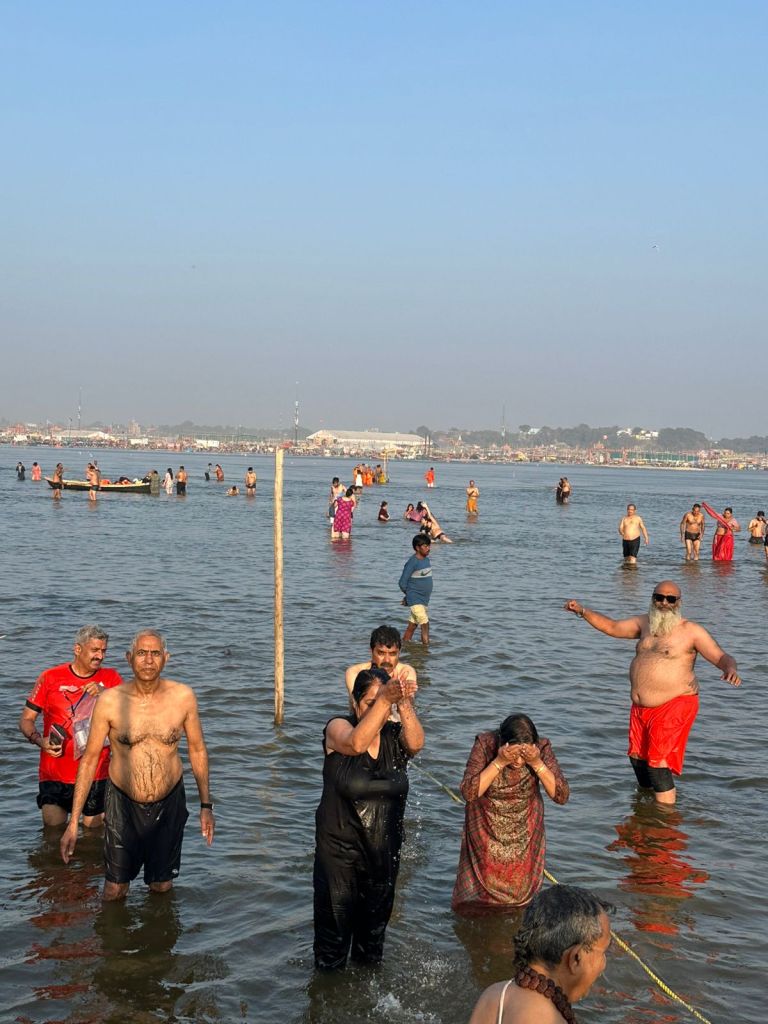
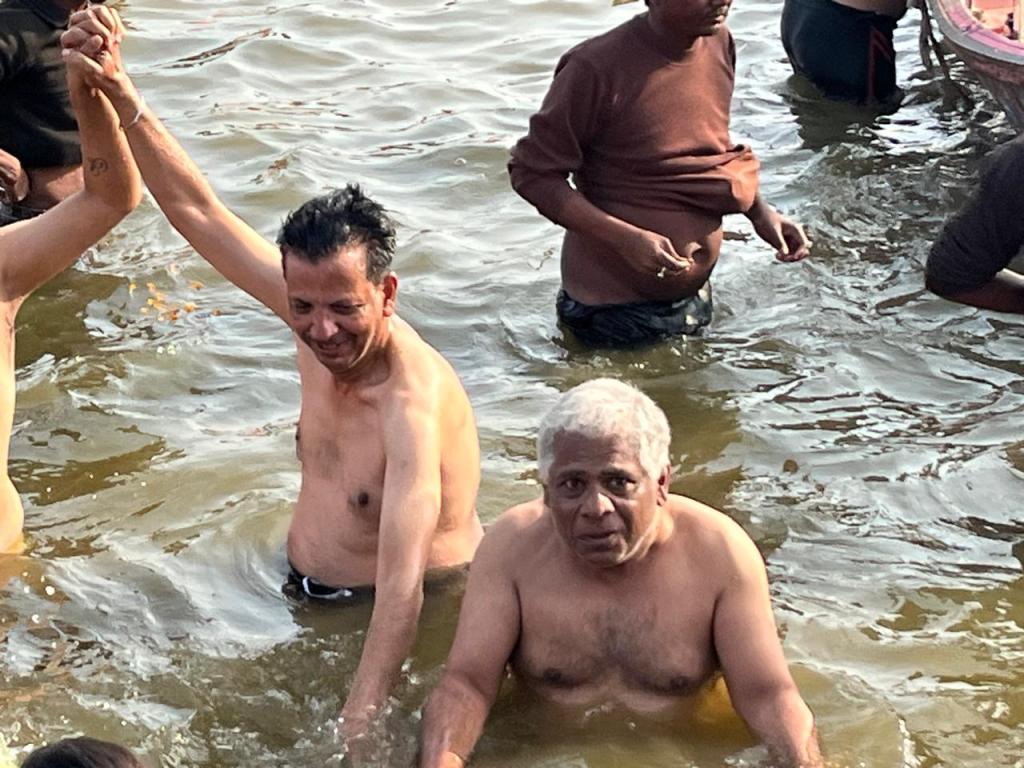
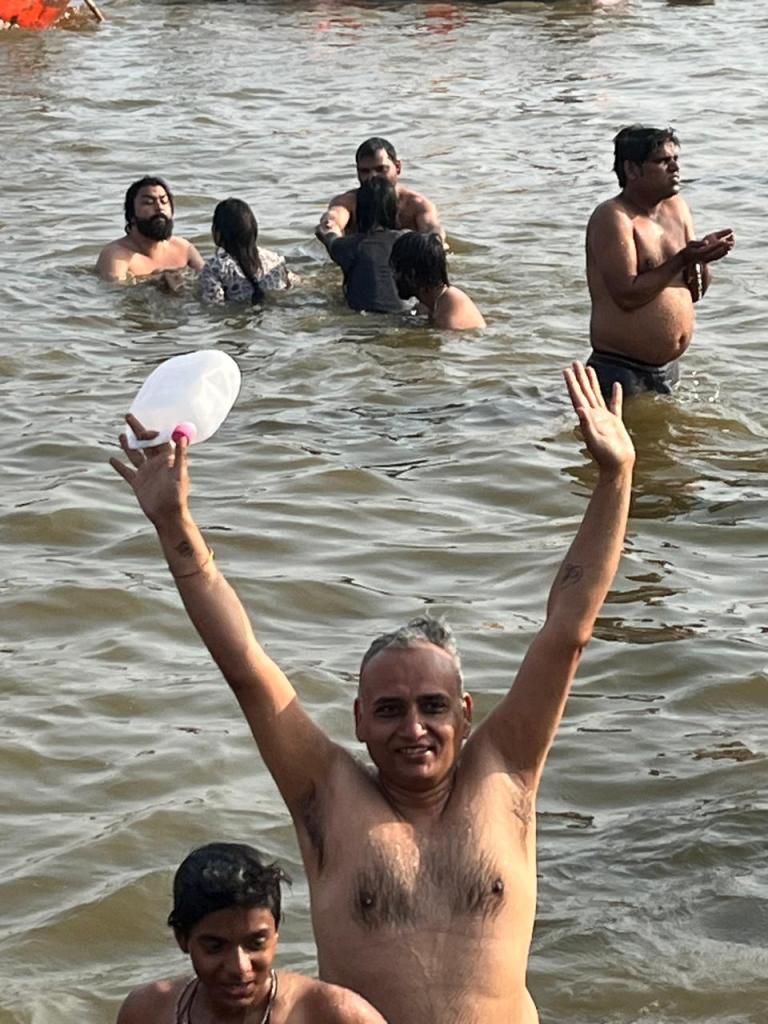
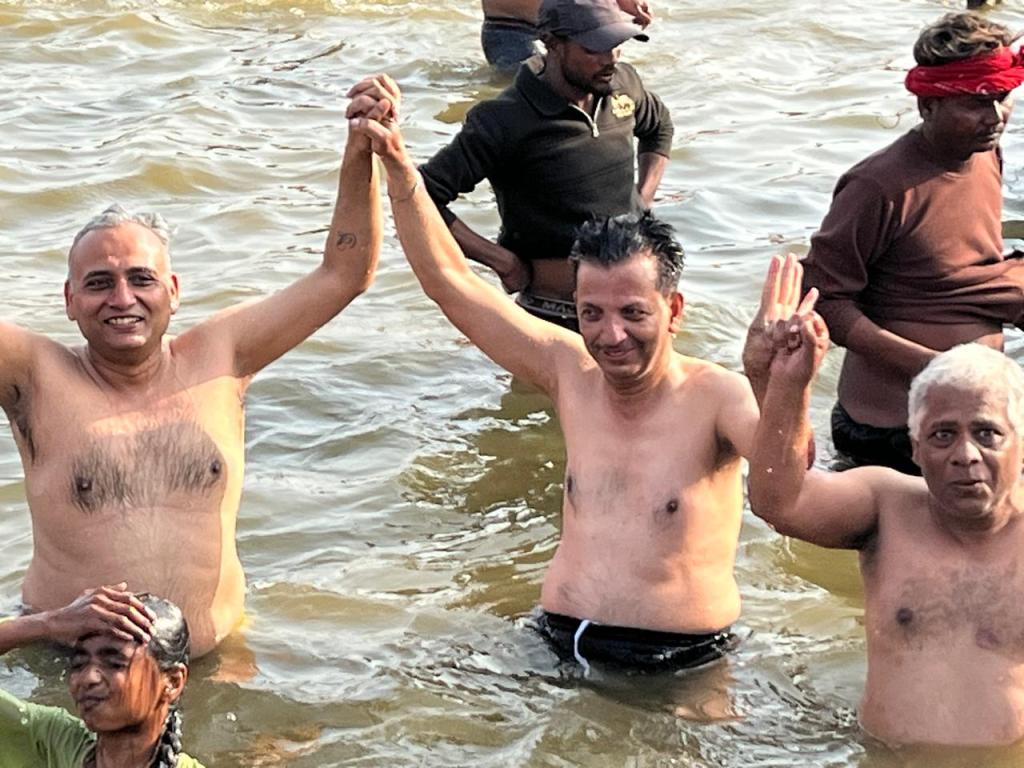
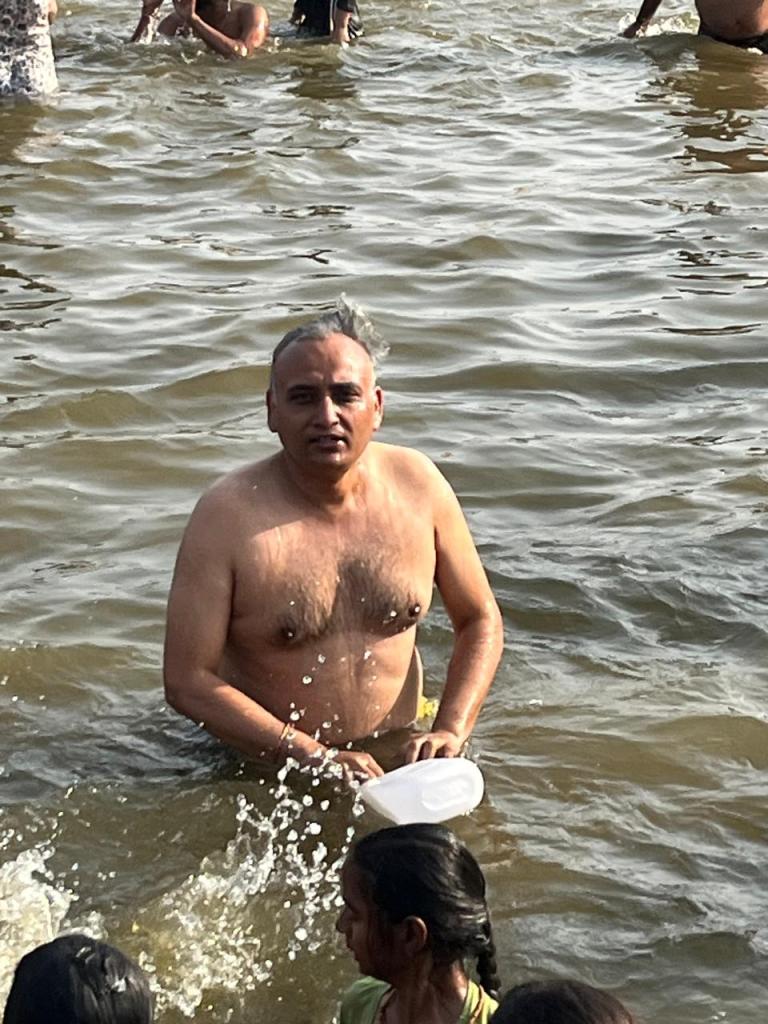
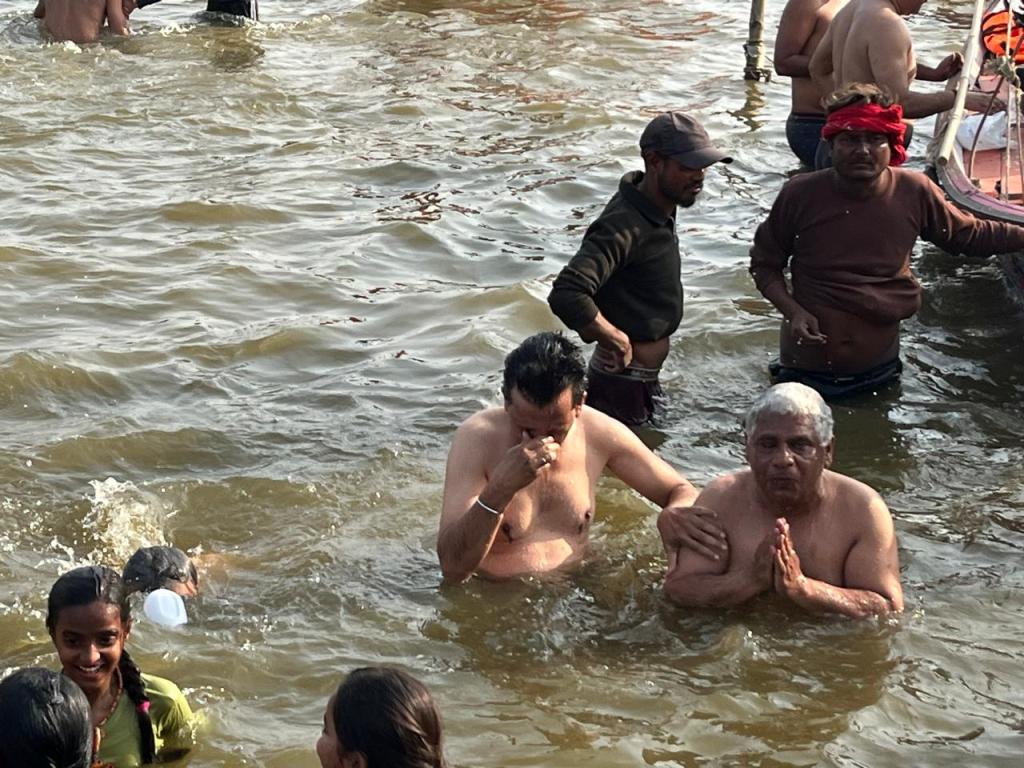
I enter the water awkwardly, bare and unsure. The shallow expanse of the Sangam forces me to kneel on its uneven bottom, and for a moment, it feels as if even the river resists my presence—reminding me that I do not yet belong. I watch, search for cues in the swift, assured gestures of others as they dip, bow, scoop, and pour water over themselves. With resolve, I follow suit, allowing the silt to press into my skin as I take three quick dips beneath the surface, then filling a kailash with cleansing water, lifting it high, and letting the cascade rush over my head. For a moment the chaos, the jostling boats, murmuring voices, and frenzied movements dissolve, and the uncertainty I’d carried for so long melts away.
I had spent days building up my confidence, questioning whether I was destined to remain a mere spectator to this ritual, on the fringes of meaning. Yet, immersed in the cool rush of the Sangam’s waters, each swift, deliberate action banished that hesitancy. No longer on the margins of the experience, I became a part of it. Emerging from the river, I recognized that I was not the same as when I entered. The change was subtle; not a burst of enlightenment, but a quiet transformation created within me by my participation. Amid the shared prayers and reflective silence, the act of snaan emerged not simply as a ritual, but as an essential embrace of the Kumbh Mela’s spirit—a revitalizing plunge into the sacred waters. In that moment, the ritual transcended a rational description. It became a profound metaphor for life’s continuous flow, where past burdens are washed away. The communal immersion transformed a solitary experience into a shared celebration of renewal a seamless blending of every individual journey into the collective story of rebirth. I carry with me the gratitude to witness and the honor of having joined this vast, chaotic crowd of seekers. I take deep pleasure in the basic fact of having been there. I don’t know what salvation is quite honestly. But maybe it has something to do with feeling, even momentarily, as though one is a part of a collective vast and whole, indescribable in its beauty even when reflected upon. I feel profoundly grateful for my fortune. This ritual so rare it comes only once every 144 years and yet, I was here. I stood in this water. I lifted that kailash.
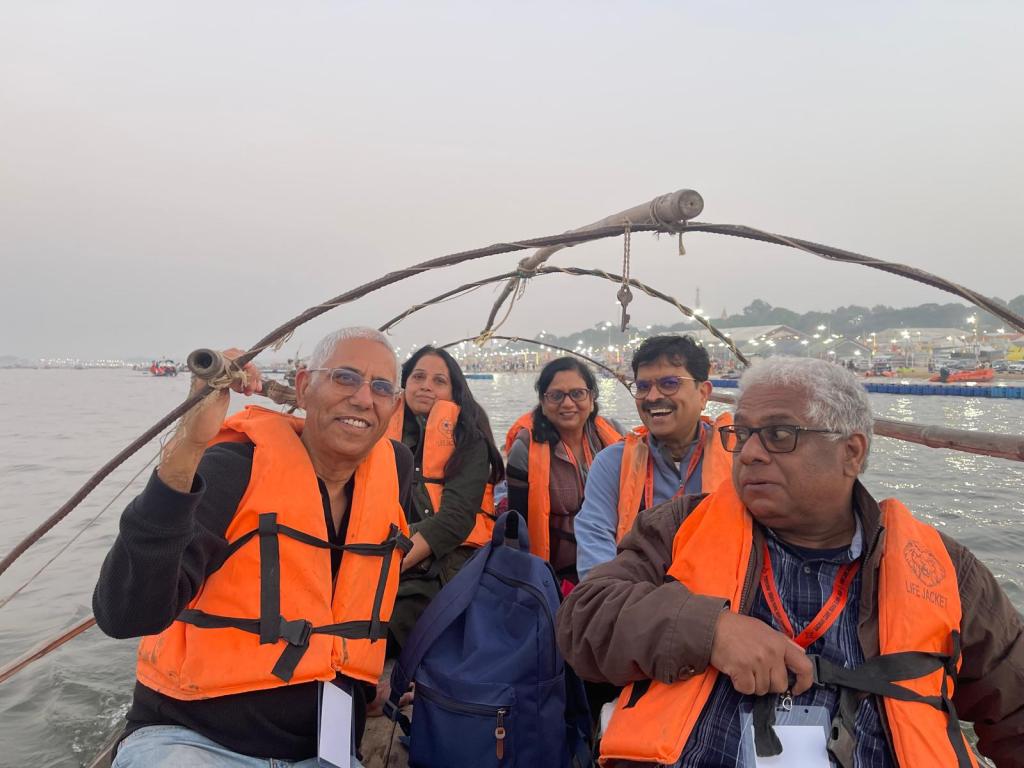
The boat turns back. The oars carve through the Yamuna, dusk dissolving the horizon, boats disappearing and reappearing in the glare of the sun on the water. I am emptied, yet full. No more urgency. Only flow. New friends beside me, welcoming me into their world, their rhythms, their family. Though I remain their guest, i am no longer a stranger, for at this moment, I am home.





 Awaara
Leave a comment