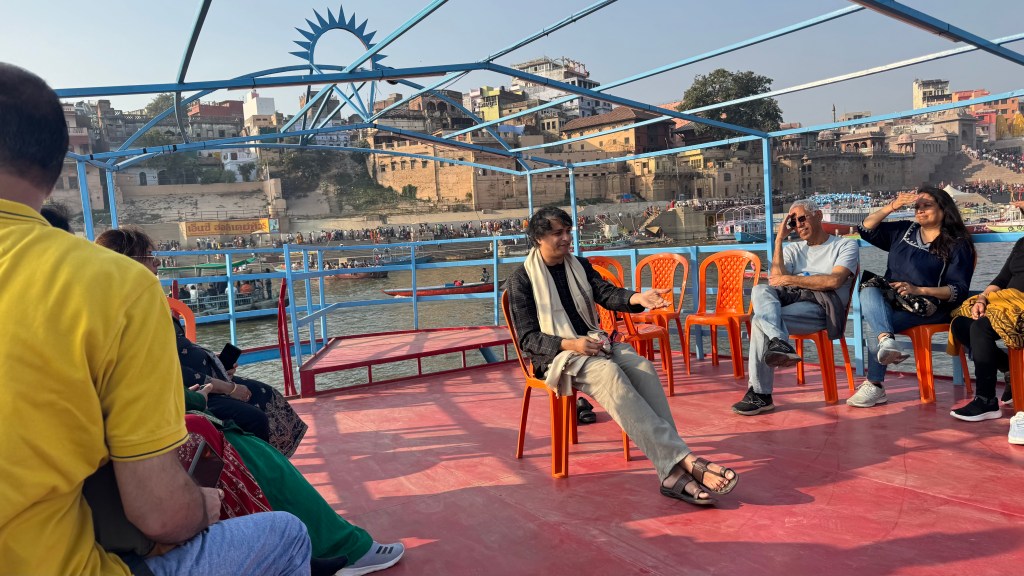
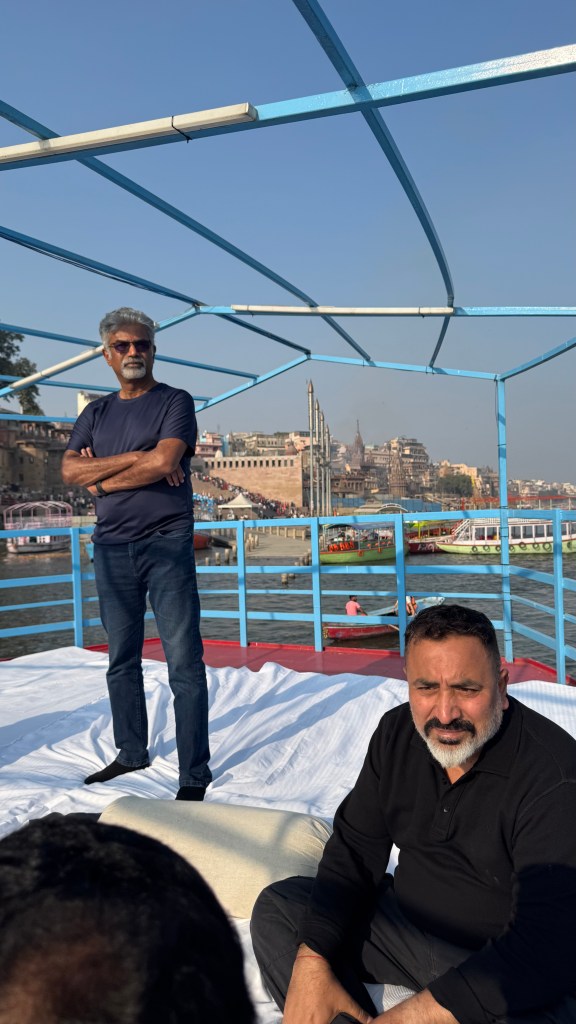
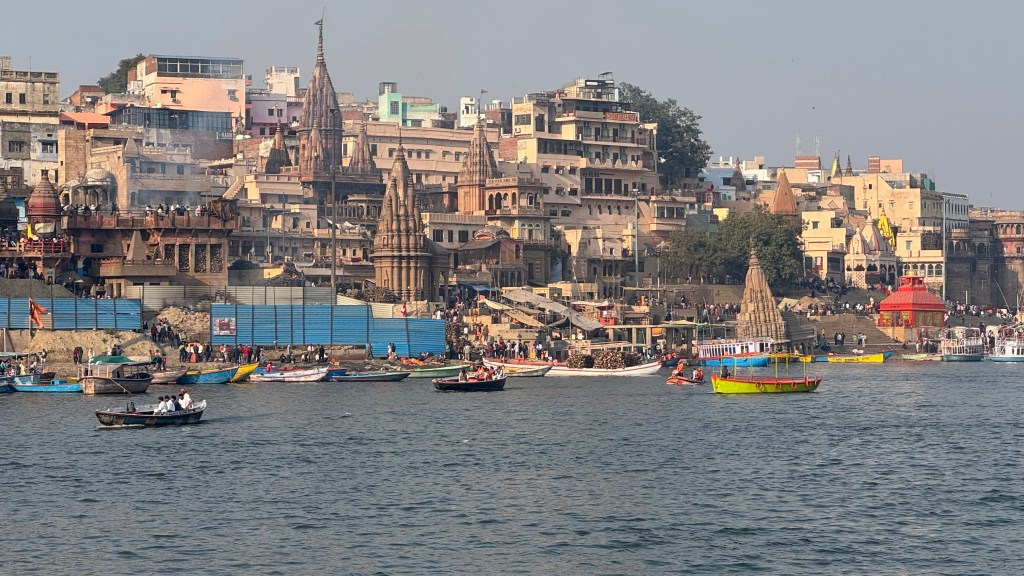
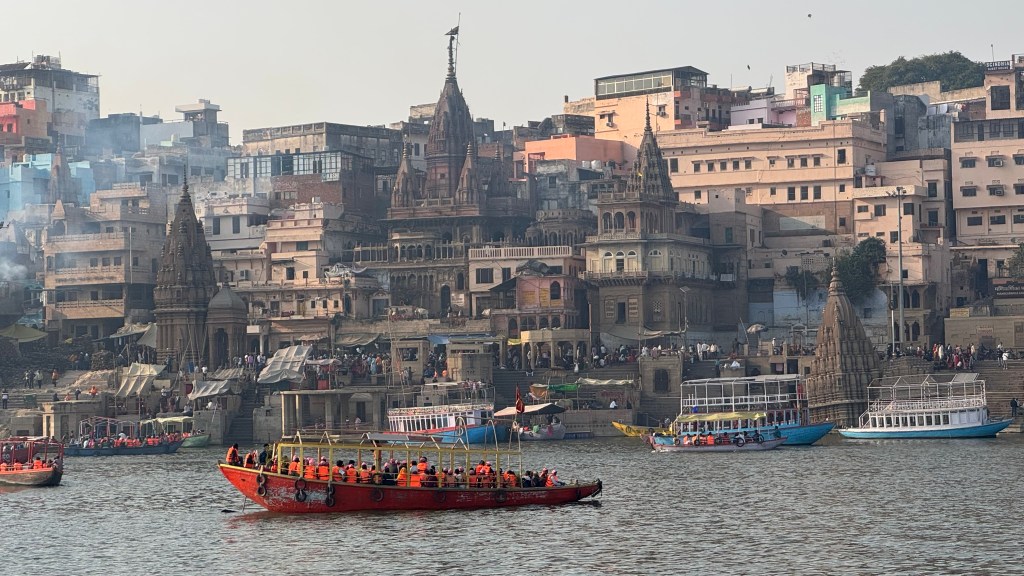
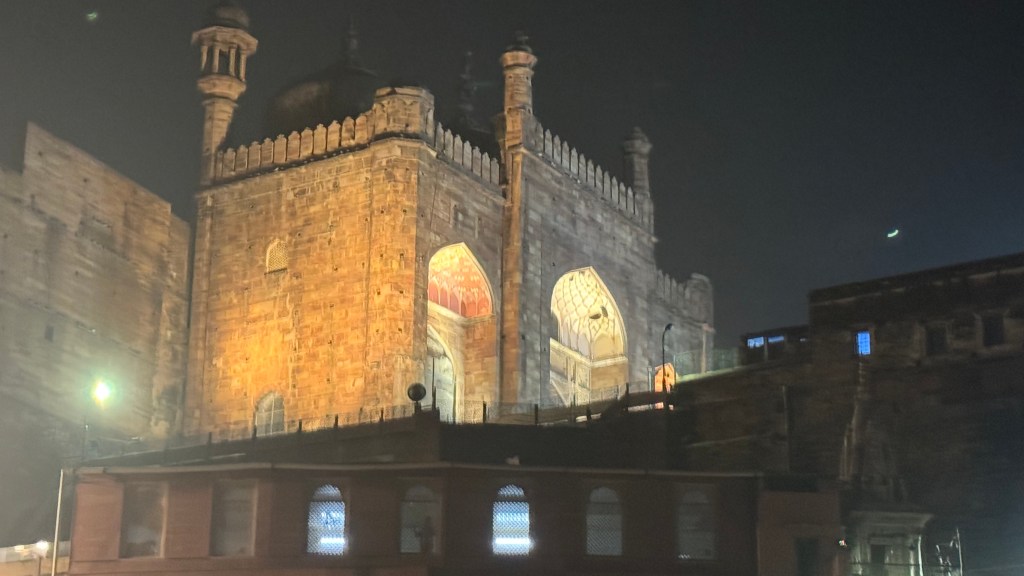
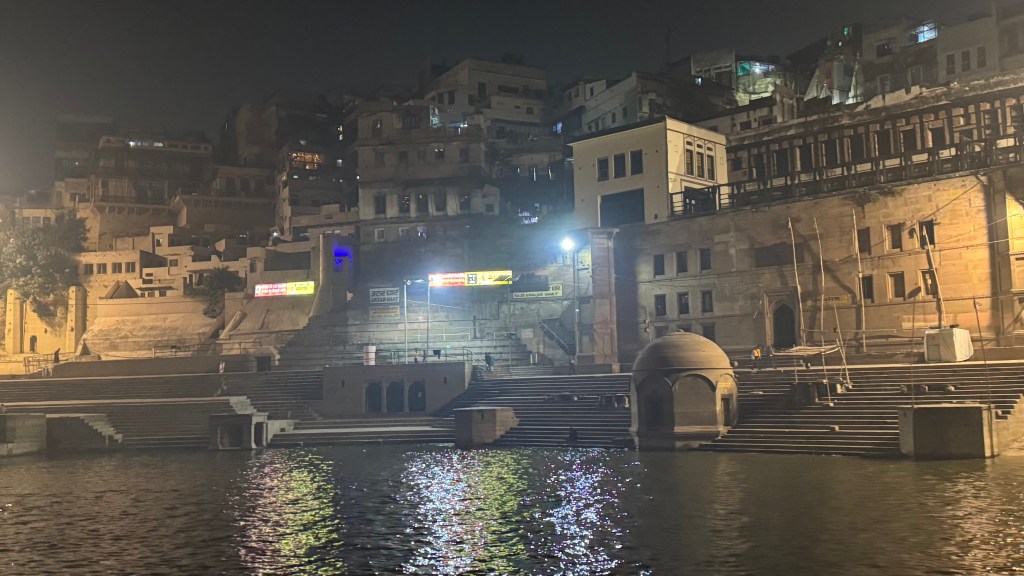
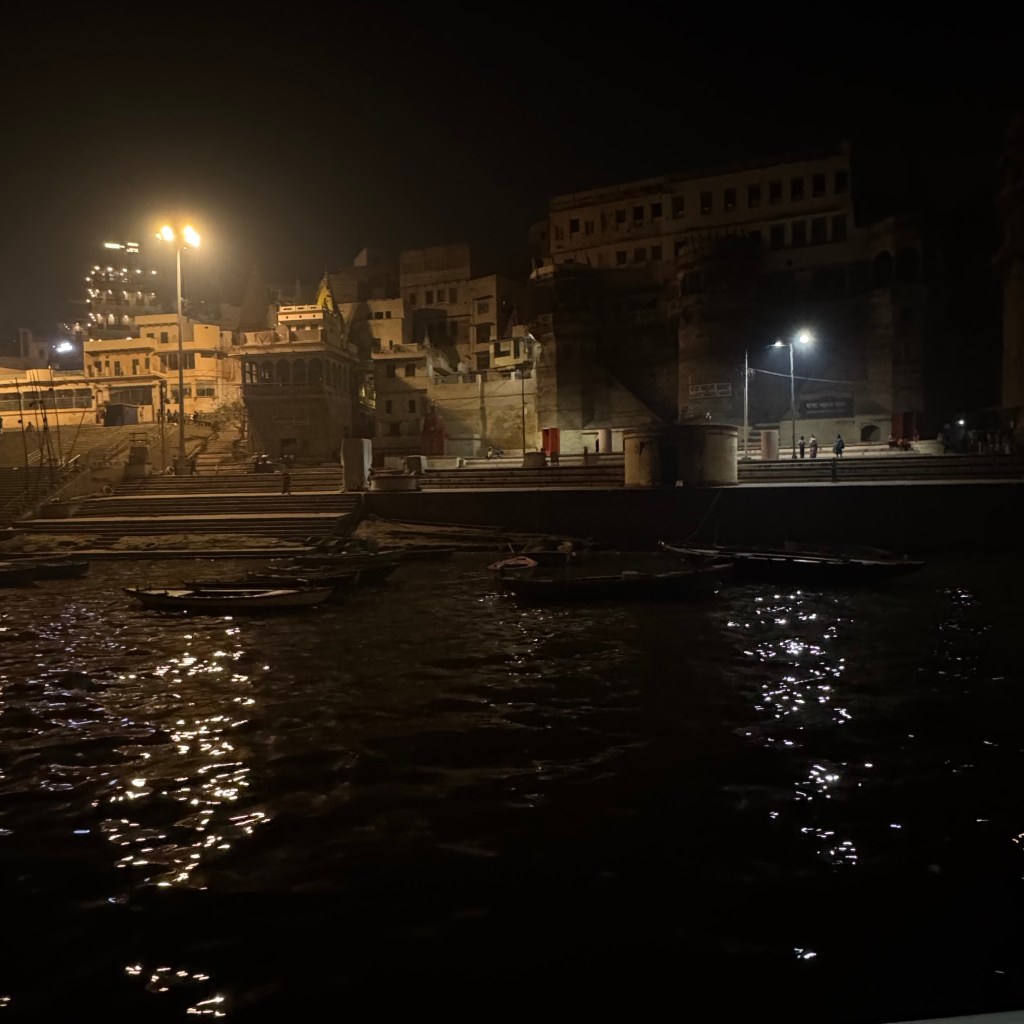
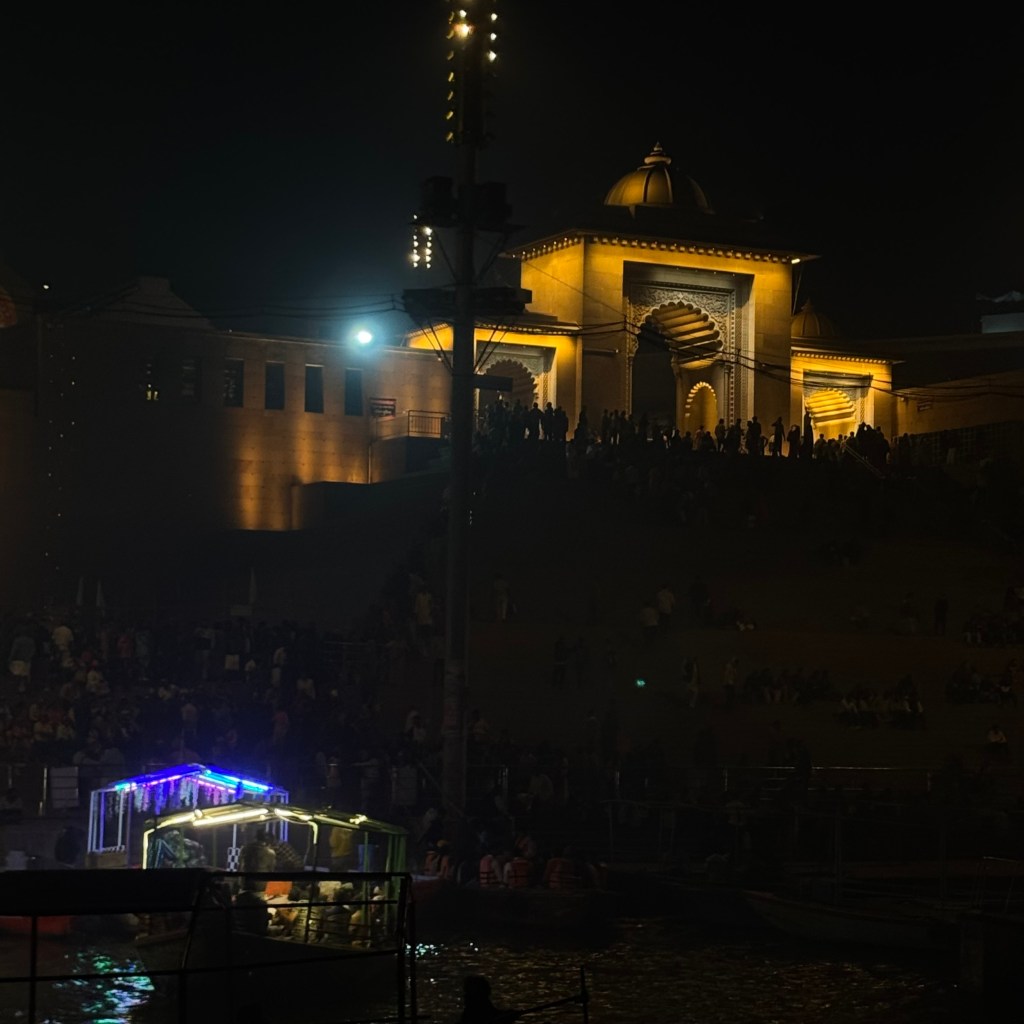
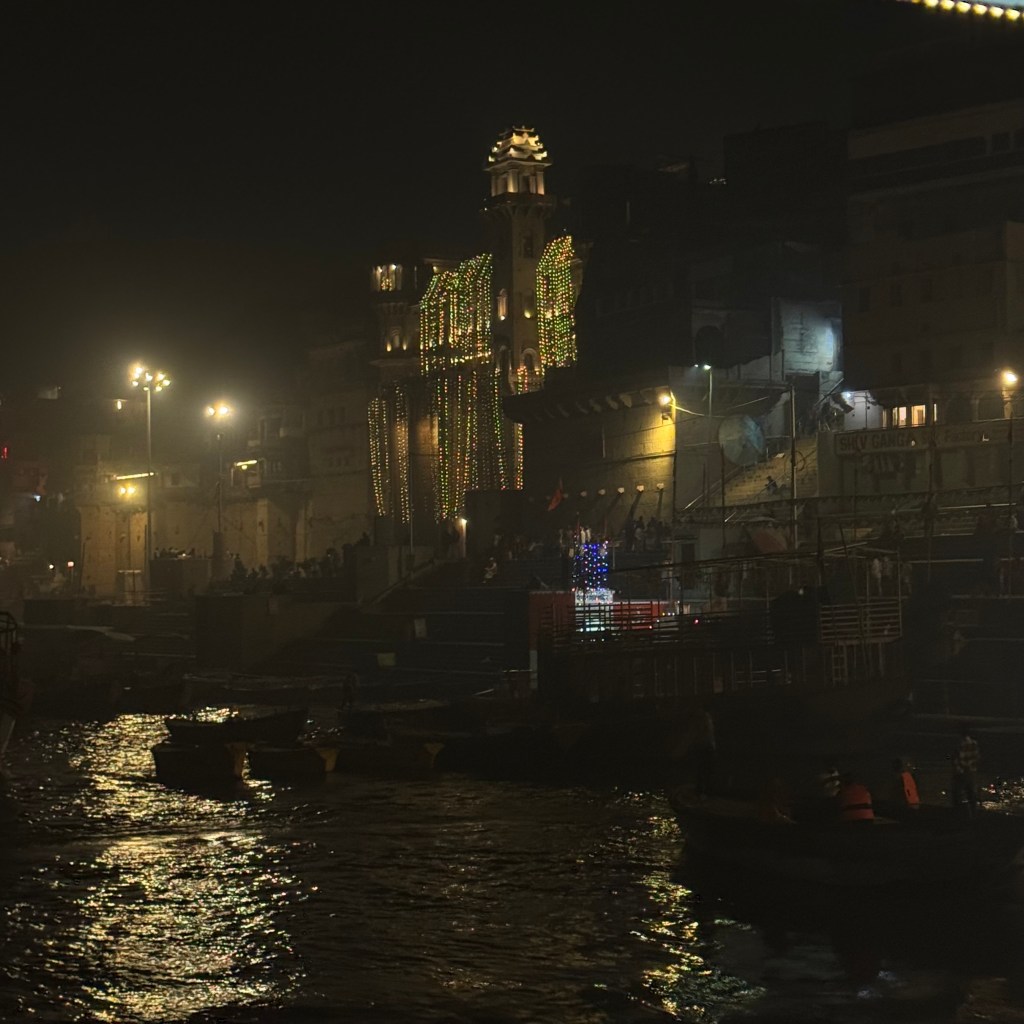
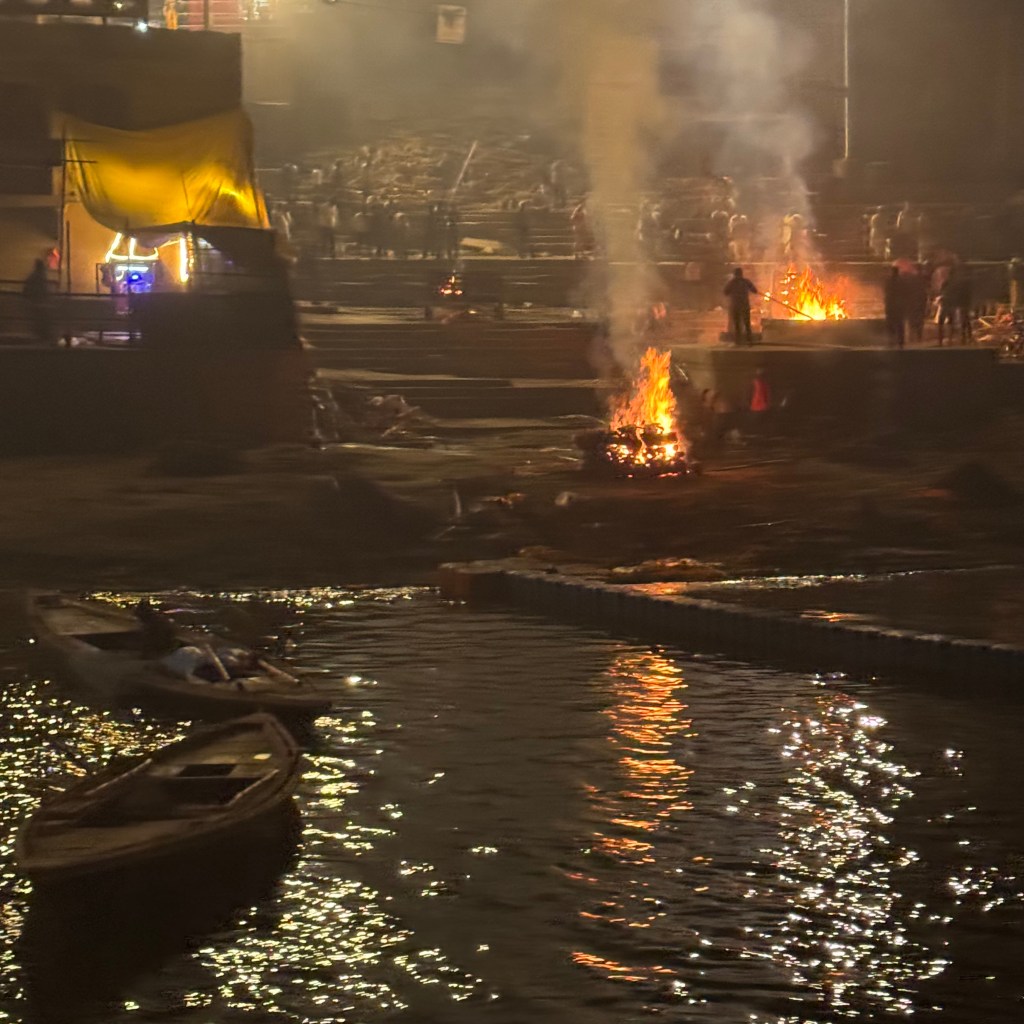
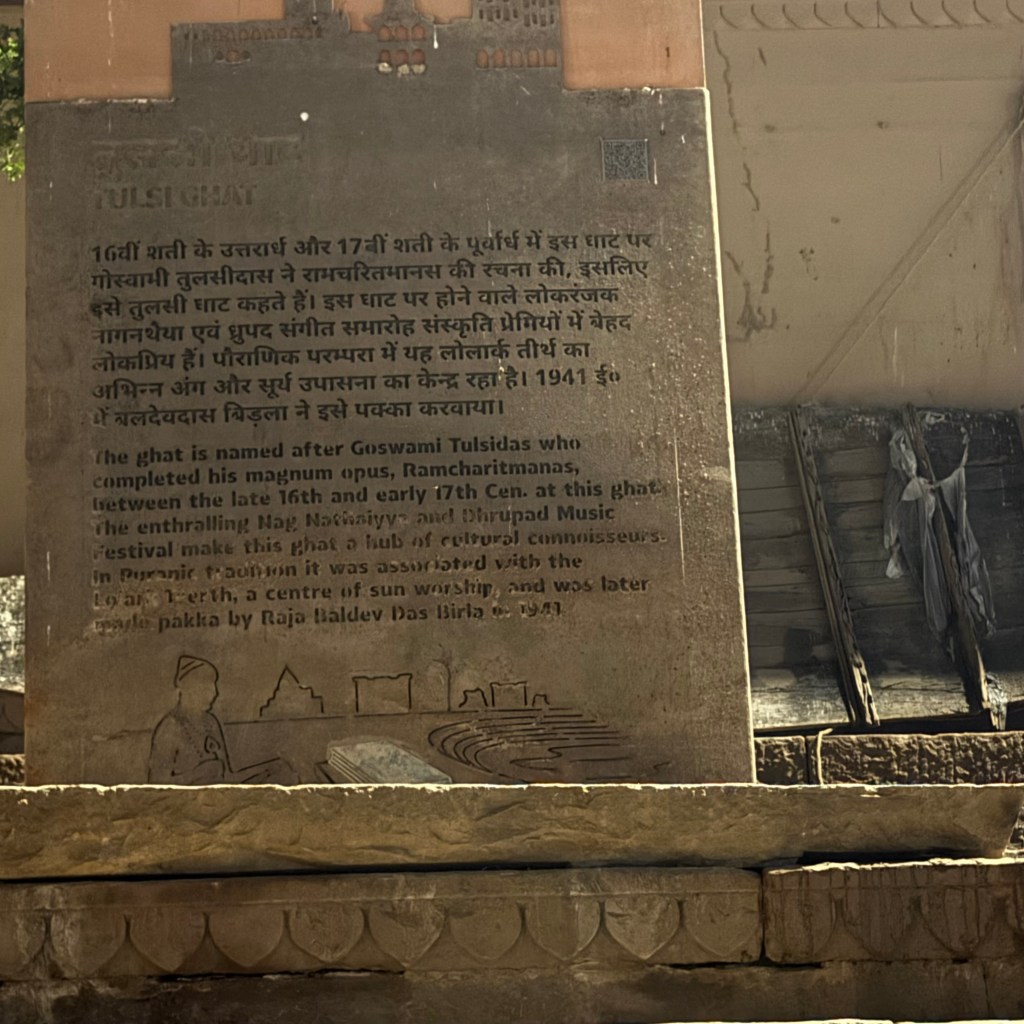
The boat cut through the river slowly, deliberately, carrying us past the city’s ancient ghats, each one a chapter in Varanasi’s long history. The guide spoke only in Hindi—Gopi’s instruction, meant to sharpen my ear—but the words I caught were enough. Dah Sanskar, the final rites. The smoke rising from Manikarnika Ghat was not just fire—it was passage, the last step toward moksha.
The closer we drifted, the heavier the smoky air became. My fellow traveler spoke of Mukti Bhawan, of places where people come to wait for death. As the story unfolded, my eyes burned more and more. The smoke curled into my lungs, stung at my vision, blurred the edges of the river and the shore—blurring, too, the line between the teeming streets beyond the ghat and the solemn quiet of this sacred threshold.
It reminded me of my dream—Shiva in his realm, where life surged endlessly yet calm reigned absolute, where voices hummed in chaos yet everything was muffled in stillness. I was caught between the two—a witness to the unceasing rhythm of India, where there is never a pause. Life. Life. Life. And more life.
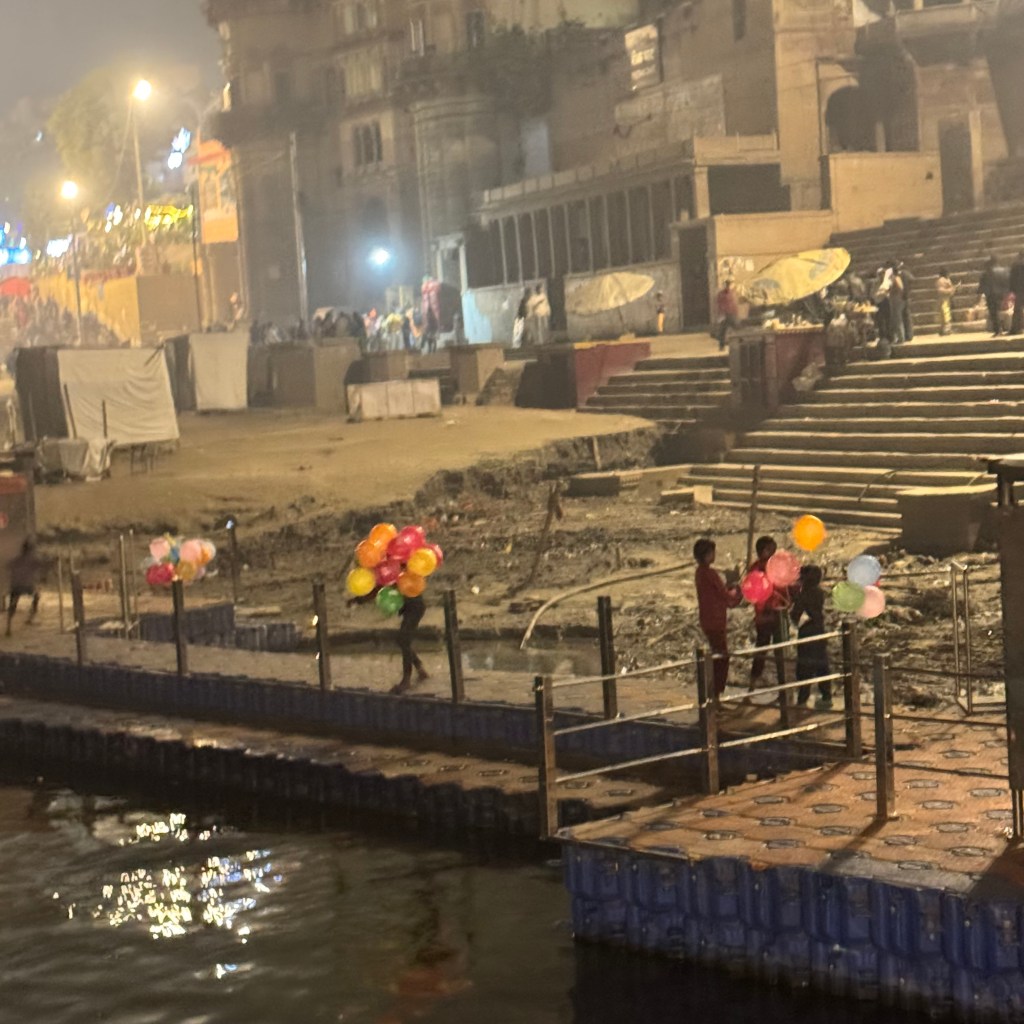
Finally, we moored near Assi Ghat, and just as my feet touched the dock, movement burst into the frame—ghabbare wale bachche, their hands full of impossibly bright balloons, running along the muddy slope to greet those stepping off the boat. The contrast hit me like a sharp gust of wind—youth and color, laughter and urgency, right beside the acrid smoke of funeral pyres.
My eyes stung now, uncontrollably. I snapped a quick picture of the children and their balloons, then hurried up the wide, tall stairs of the ghat, rushing into the chaotic land made for those still living.
More chai, I thought. More life.

 Awaara
Leave a comment